Dusk changes the ordinary world without asking you to produce anything. The light shifts on a wall you have passed all day. A bird becomes more audible. A familiar path looks different. The Dusk Witness Walk is a personal ritual built around noticing that transition and choosing a clear end to one part of the day. It does not require collecting plants, identifying omens, or turning every observation into a message.
You will choose a short safe route, notice three ordinary details, name one thing you are leaving unfinished, and make one practical closing action when you return. The walk can be outside, beside an open view from a window, or along a suitable indoor route. Its meaning comes from your attention. The change in light is an invitation, not proof that the universe has evaluated your day.
Choose a route for the actual conditions
Use a familiar route with an appropriate surface, lighting, weather, and visibility. Dusk can reduce visibility quickly. Follow ordinary traffic and personal safety precautions, and choose daylight instead if the conditions are unsuitable. Let a household member know your plan where appropriate. A spiritual practice does not need to become an adventure to feel meaningful.
Set a modest duration, such as eight to twelve minutes. You can shorten it to a few minutes at a window. Mobility, caregiving, and weather do not disqualify you. If you are supervising children, keep that responsibility central and adapt the route rather than expecting the ritual to create private time that is not available.
Give observation a simple shape
Notice one detail of light, one detail of sound, and one detail of the place itself. Light might be a reflection on a parked car. Sound might be a distant dog or leaves moving. Place might be a repaired gate, an uneven brick, or a plant you have seen before. You are witnessing an ordinary environment, not gathering an impressive nature report.
Describe each detail without immediately interpreting it. 'The porch shadow reaches the step' is an observation. 'This shadow means I must change my life' is an interpretation. You can explore personal meaning later, while keeping the difference visible. This separation protects the walk from becoming another demanding attempt to find the correct spiritual answer.
Name one unfinished thing
Choose one task or thought you will not complete tonight. Say or write what it is and where it will wait. An unfinished letter can wait in its draft folder. A practical household task can wait on tomorrow's list. A difficult conversation may need a later time and appropriate support. Give the unfinished thing a destination rather than pretending it no longer matters.
Use a sentence such as 'I am leaving the cupboard project for Saturday.' Avoid promises that you will never worry again. The purpose is to mark a decision about tonight, not control every future feeling. If something truly requires immediate attention, handle that responsibility first and use the walk later.
Carry no collected materials
This is a no-foraging practice. Leave plants, stones, feathers, and other materials where they are. You do not need to know whether a plant is safe to collect because collection is not part of the ritual. A photograph can be useful if permitted, but a written observation often preserves the detail without interrupting the walk. Respect property, wildlife, local rules, and other people's privacy.
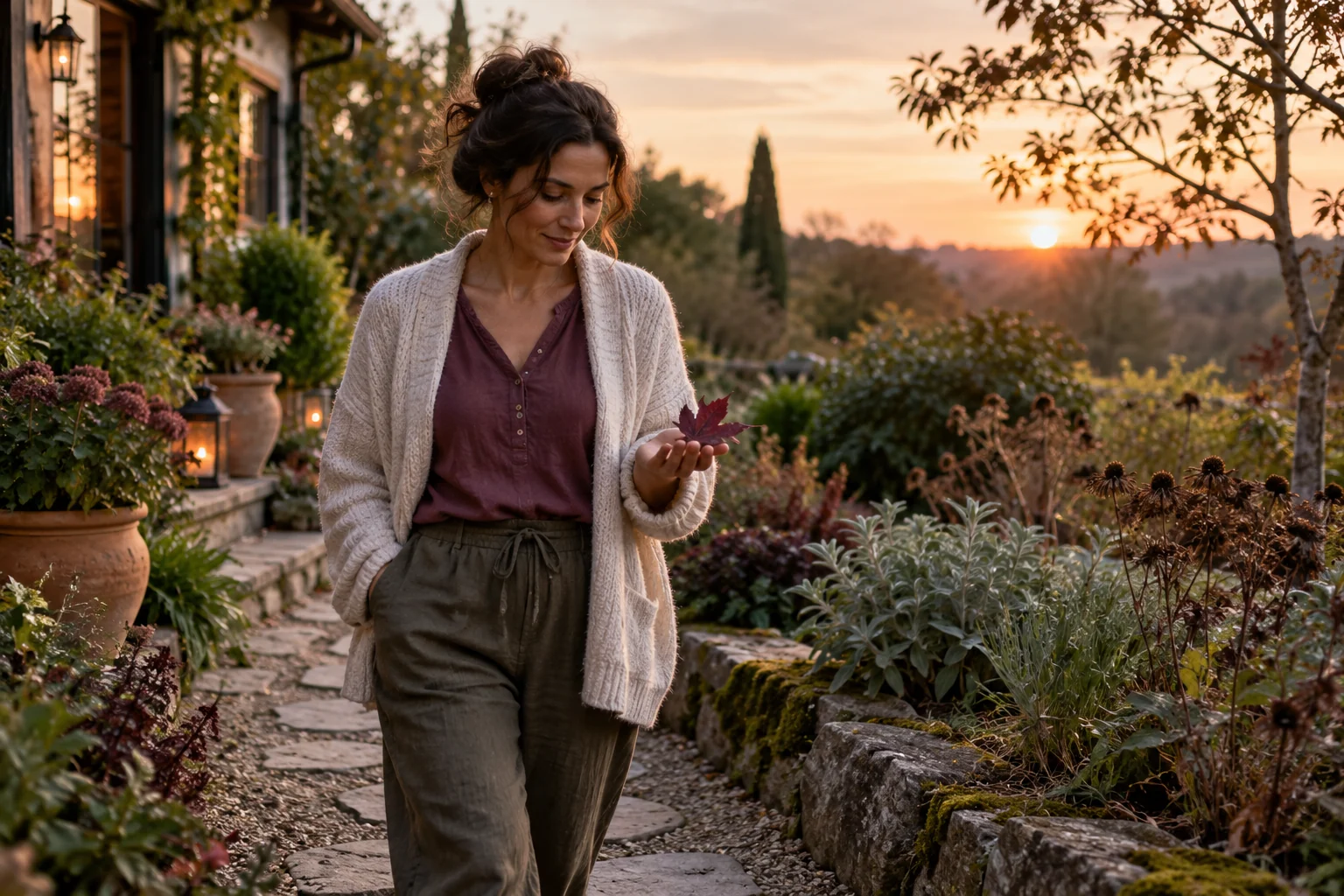
If an object feels meaningful, write what you noticed rather than claiming it was placed for you. The same leaf can be an ordinary leaf and a useful personal symbol. You can value the association without presenting it as a fact about another person's intentions, your future, or an unseen cause.
An illustrative walk after a difficult workday
A woman chooses the short path around her own yard. She notices the gold reflection on a window, the sound of a neighbor putting away a bin, and a small gap in the garden fence. She names an unfinished invoice and decides it will wait in the morning work folder. On returning, she closes the laptop and puts her supper bowl on the table.
The invoice still exists. The neighbor's noise was not a spiritual sign. Yet the walk created a specific transition: work was placed somewhere it could be resumed, and the evening began with a visible action. This is the kind of ordinary consequence the field journal is designed to capture.
Close with something you can do
Choose a return action before leaving: put away the work object, start an ordinary meal, turn on the home light, or place tomorrow's note in its location. The action should take under two minutes and fit the household's needs. If it requires a full cleaning session, it is too large for this practice.
Complete the journal with three observations, the unfinished thing's destination, and the closing action. You do not need a beautiful paragraph. On a rushed day, a few words are enough. If the practice feels like another duty, use it less often or close it. A ritual that supports your life should remain available by choice.
Keep the walk honest
Notice whether the route is pleasant, safe, and practical. Adjust the time of day as the season changes. Do not force darkness or solitude because a guide describes dusk. The core practice is a brief witness to transition, a chosen limit, and a real return action. Those parts can belong to many kinds of home and many kinds of evening.
Your Homeketeers field workbook: put this guide into practice
The Dusk Witness Journal uses five small records rather than a long reflective essay: route, light, sound, place, and return. A separate line holds the unfinished task's destination. Complete it in plain words. The workbook includes an indoor version so weather, mobility, or caregiving does not turn the practice into something you have failed to perform.
Route and ordinary safety check
Name the route, expected duration, weather, lighting, and available supervision. Choose a window version if the outside route is unsuitable. Record where you will turn back and what would make you stop. Do not treat an unsafe condition as a test of commitment. The practical route supports the ritual, and changing it preserves the purpose rather than weakening it.
One detail of light
Describe a visible change: a reflection, shadow, color, or illuminated surface. Write what you actually saw before adding personal meaning. You can include a simple sketch. Avoid requiring a sunset; ordinary weather may produce no dramatic sky. The exercise trains attention to the conditions that exist, rather than asking the day to supply a photographable experience.
One detail of sound
Record a sound and its ordinary source if you know it. If you do not know, leave the source uncertain. Notice whether the sound was near, distant, continuous, or brief. You do not need to make it pleasant or interpret it as a message. The journal can hold a noisy street as honestly as a quiet garden.
One detail of place
Choose a familiar object, surface, or plant and note something specific about its current state. Leave it in place. If you photograph it, respect people, property, and local rules. Write the observation in a way you could recognize next week. This gives the practice a relationship with your actual surroundings rather than a collection of interchangeable nature descriptions.
The unfinished thing's destination
Name one task that will wait and where its next action is recorded. Include a realistic return time if needed. A draft folder, calendar note, or project packet is more useful than a vague promise to remember. Do not defer an urgent safety or care need. This field marks a deliberate limit on tonight's work while preserving the ability to resume responsibly.
Your return action
Choose a brief ordinary action that begins the next part of the evening. Record whether it happened and what interrupted it if not. The action might be closing a work device, placing a meal bowl, or setting out tomorrow's note. Keep it small enough to complete without starting another project. The return action makes the ritual's ending visible in the household.
Keep a record that tells you what actually changed
After three walks, compare the routes, observations, and closing actions. Did the practice help you place unfinished work somewhere usable? Did the route fit your available time and responsibilities? Remove a prompt that makes the journal cumbersome and keep the parts that bring useful attention. You do not need to measure a mood improvement to justify an enjoyable walk. This original Homeketeers practice offers a clear way to notice a transition and choose an ending. Its meaning can remain personal, while the route, observations, and practical follow-through remain ordinary and verifiable.