
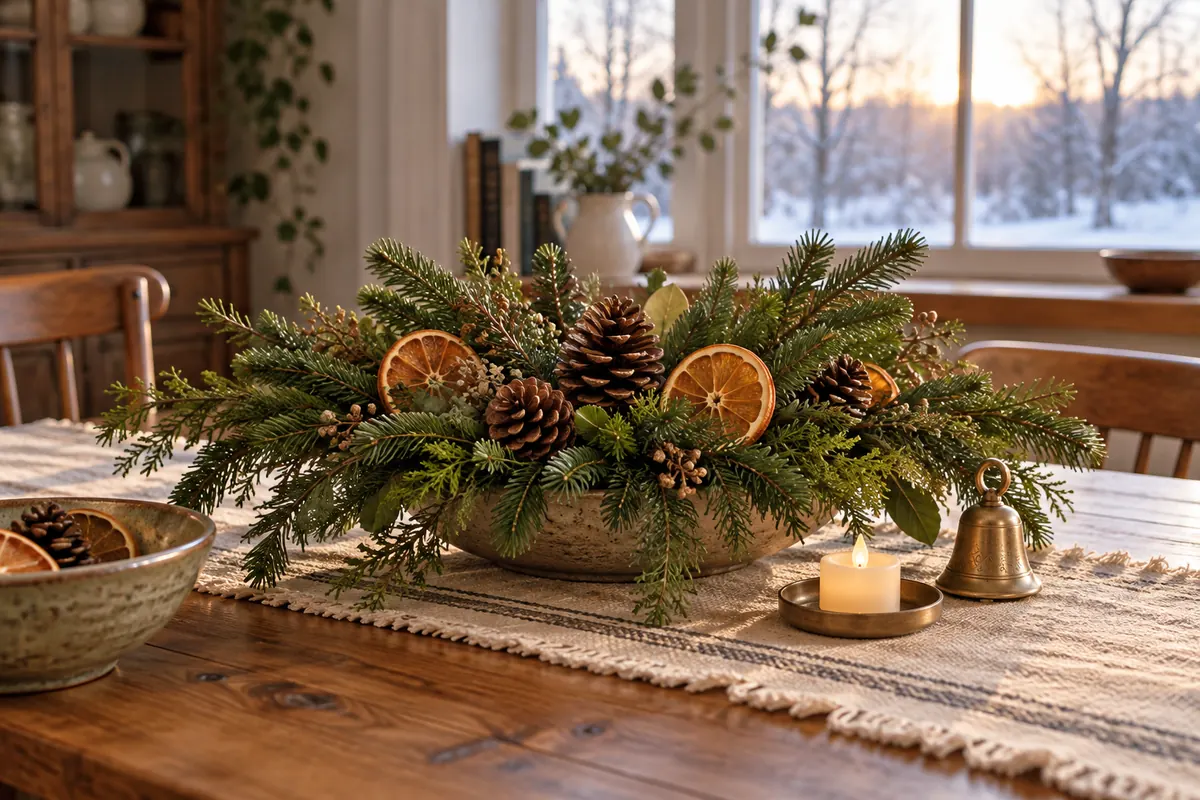
In the Northern Hemisphere, the 2026 winter solstice falls on Monday, December 21. Many contemporary Pagans observe Yule around the solstice, though practices differ by tradition, family, and region. This article offers an open, home-based ritual, not a reconstruction of a closed tradition. You can use the word Yule if it belongs in your practice, call it a winter solstice gathering, or leave the ritual language out entirely.
The ritual centers on one small light and one decision about care. It does not require an altar, a special tree, a particular deity, a feast, or an expensive supply list. The purpose is to mark the seasonal turning, notice the conditions of your own household, and choose what you want to tend as winter continues.

A brief note about tradition and adaptation
Yule is used in different ways across historical and contemporary sources. A single modern article cannot stand in for every Pagan tradition or explain every community’s practice. If a specific ritual, symbol, or language belongs to a tradition you do not practice, learn from sources within that community rather than borrowing it as generic decoration. The steps below are intentionally simple and can be adapted without claiming to represent a whole culture.
What to gather
- One small battery tea light, lantern, or another safe source of light.
- A piece of evergreen from a source where you have permission to gather it, a fallen branch, or a drawing of a tree. You can also use nothing at all.
- A notebook and pencil, optional.
- A warm drink or seasonal food you already have, optional. No offering needs to be placed outside.
Before the ritual
Choose the scale that fits your energy. This may be a two-minute pause at a window, a quiet meal with another person, or a longer evening practice. You do not need to make the longest night feel magical, joyful, or productive. If the season is difficult, the ritual can simply acknowledge that you are here and that conditions change.
Decide what the light represents for you. It could stand for one value, such as steadiness or welcome, or for a practical support you want to keep close. It does not have to symbolize a guarantee that everything will improve. If you share the ritual, let each person interpret the light privately or pass without explaining.
Divine, Cast, Verify
Divine is the presence or value you invite into the moment: a deity you already honor, the land and seasonal cycle, a family memory, or something as plain as warmth and companionship. Use only language that is yours to use. A secular practice can name the sunlight, the calendar date, or the ordinary care that carries people through winter.
Cast is what you do with the pause. In this ritual, you notice what needs protection or care, choose one value to carry forward, and turn it into an action. If you want more connection, invite someone for a meal. If you need quiet, reserve an hour. If the house needs practical winter preparation, choose a real task and use the appropriate tools or professional support.
Verify is how you revisit the intention. Pick a date in early January and check whether the chosen action happened and whether it helped. If plans changed, record why. A symbol can remind you of an intention; it cannot make other people comply or replace practical safeguards.
A step-by-step Yule ritual
- Prepare a small place. Clear a heat-safe surface or sit by a window. Set down the battery light, evergreen or drawing, and notebook if you are using them. Leave enough space for children or pets to move safely.
- Arrive in the season. Notice the daylight, temperature, and what your household is doing tonight. You may say, “This is the longest night. I am marking the turning toward more light,” or use your own words.
- Choose what you want to protect. Write one source of support you want to tend during winter: a bedtime routine, time outdoors when it is safe, a connection with someone, a budget boundary, or a weekly meal that makes the week easier.
- Name what needs tending. Choose one modest action connected to that support. Do not write a list of everything that is wrong. For example: put a walk on the calendar, ask a relative to share a task, or check the weather before planning an outing.
- Switch on the light. Let it represent the value you named, or simply mark that you have paused. If you use spoken words, keep them specific: “May I make room for rest and accept help when it is offered.”
- Share or keep private. If others join, invite them to name one hope, one need, or nothing at all. Children may draw instead of speaking. No one needs to disclose painful experiences or promise a particular outcome.
- Close with an ordinary act of care. Turn off the light, put away materials, eat something, or return to your evening. A ritual ends when you decide it ends.
A completed example
Value: steadiness. Support I want to protect: a quiet Sunday breakfast before the week begins. What needs tending: we keep filling the morning with errands. One action: ask the family which Sunday in the next two weeks can stay open, then put it on the shared calendar. Verification date: January 4. Evidence I will look for: did we keep one breakfast free of errands, and did that feel useful? If the plan did not happen because of work or caregiving needs, I will choose another realistic time rather than judging the family or treating the missed plan as a spiritual failure.
Ways to make it work for your household
- No fresh greenery: Use a sketch, a photo, a reusable decoration, or nothing. The ritual does not depend on a plant.
- No flame: Use an electric light or do the whole practice in daylight.
- With children: Offer choices about the light, drawing, or snack. Do not require them to sit still or speak on cue.
- Celebrating alone: Keep the ritual private. You do not have to post it or make it look beautiful.
- Not celebrating Yule: Call it a winter pause, or skip the seasonal framing and keep the check-in.
The winter practice card
- This season I want to protect: ___
- A support I already have: ___
- One action I choose: ___
- A date to check whether it helped: ___
- What I learned or need to change: ___
The verification date matters because an intention can sound appealing in the quiet of a ritual and still be too demanding in daily life. If it did not fit, revise the action. If it did help, identify what made it possible. You are recording a real pattern, not proving that the season rewarded you.
Questions people ask about Yule
Is this an ancient Yule ritual?
No. This is a contemporary, open home practice written for readers who want a simple way to mark the solstice. Yule has historical and modern meanings that vary, and this article does not claim to reconstruct any particular historical ceremony.
What if I do not have the energy to celebrate?
Use the two-minute version: notice the date, switch on a small light if you want, name one support, and stop. Resting or not celebrating is also a valid choice.
Can my family use this if we have different beliefs?
Yes, if everyone is free to adapt or pass. Keep the shared structure practical: notice the seasonal change, choose one care action, and let each person decide what the light or pause means to them.