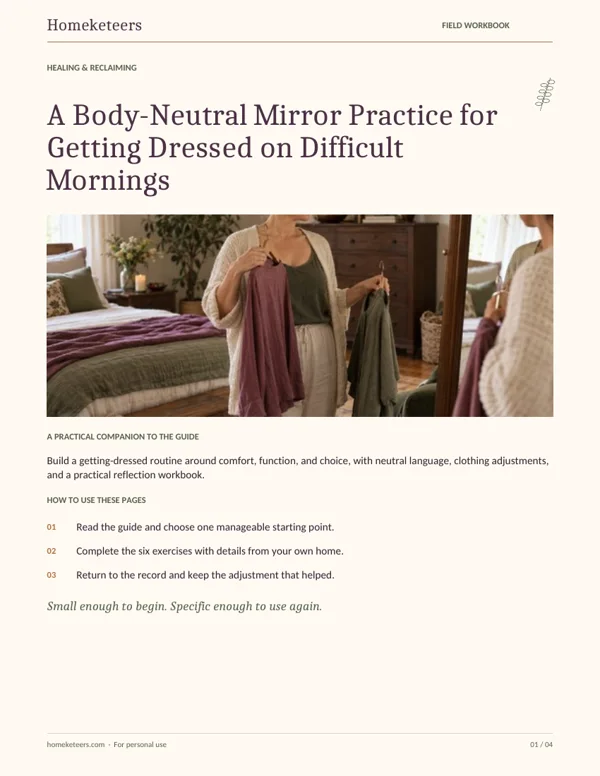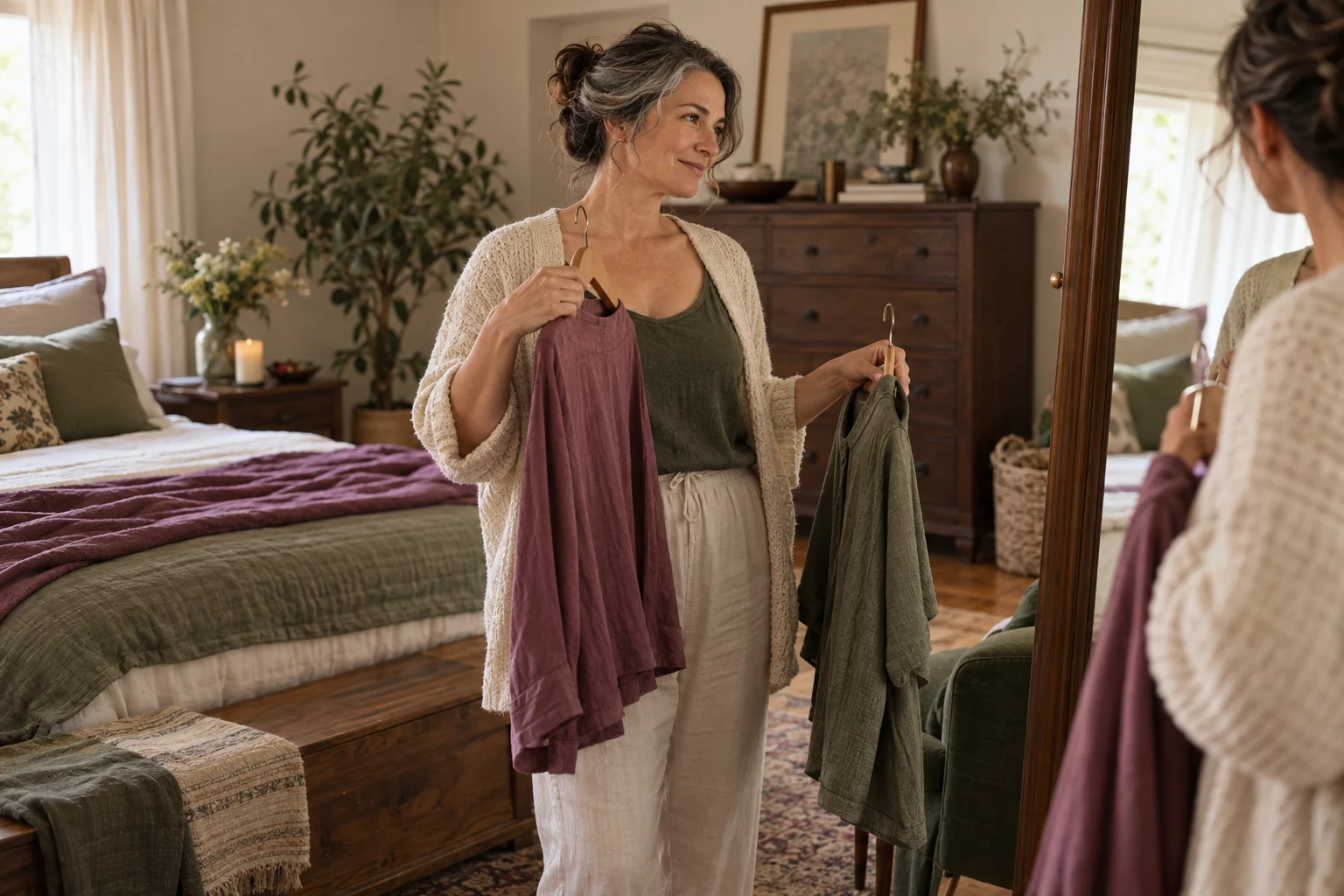
Some mornings, a mirror turns getting dressed into an argument. A shirt feels wrong, a photograph comes to mind, or the day begins with a familiar inventory of perceived flaws. You may not be ready to replace that inventory with enthusiastic praise. Body-neutral language offers another possibility: describe what is present, choose what supports the day, and leave some judgments unanswered.
This Homeketeers practice is a short dressing routine. It is not treatment for an eating disorder, body dysmorphia, or another mental health condition, and it does not require you to look in a mirror if that increases distress. You can use the clothing and comfort steps without the mirror. The aim is to make one ordinary task more workable, while preserving your right to seek qualified support when body distress interferes with daily life.
Choose a task before you choose an opinion
Ask what you need clothes to do today. You may need to sit comfortably for several hours, move between warm and cold spaces, lift a child, attend a meeting, or take a short walk. These needs give the morning a concrete decision. “Can I bend and breathe in this?” is answerable. “Do I look good enough?” may become an argument with no ending.
Set out two realistic options before the difficult morning if possible. They do not need to be your most impressive outfits. Choose garments that fit your current body and the expected activity. Clothing that fits a previous version of your body is not a daily assignment you must pass. Store it separately if seeing it repeatedly creates pressure, or decide later whether you want to alter, donate, or keep it.
Use descriptive language without forced praise
Stand or sit where you can assess the garment, rather than inspecting every part of yourself. Describe the clothing: the sleeve ends at your wrist, the fabric stretches when you sit, the waistband presses when you bend. Replace “My body is wrong for this” with “This waistband is uncomfortable today.” The change identifies something you can alter.
Neutral wording is not a rule against affection or joy. If you enjoy a color or feel pleased by an outfit, let that be true. If you feel disappointed, you can acknowledge that too. The practice simply declines to make a moral judgment about your body necessary before you leave the room. You can say, “I am having a difficult body morning, and I still need clothes that let me do my day.”
Limit the number of checks
Choose a small checking sequence: front view for the garment arrangement, a movement check, and any practical adjustment. Then leave the dressing area. Repeatedly returning to the mirror may not produce new useful information. If you notice yourself restarting the inspection, ask whether there is a specific clothing problem to solve. A twisted seam needs attention; an undefined feeling of not being acceptable may need a different response.
You can cover or move a mirror temporarily, dress away from it, or ask a trusted person a narrow practical question such as whether a label is showing. Avoid seeking repeated reassurance about your whole appearance if the answers never settle the question. The purpose of the routine is to finish dressing, not to recruit an audience for an unresolvable evaluation.
Make a comfort adjustment before an identity judgment
Try a different waistband, a softer layer, another shoe, or an adjustment to the room temperature. Check whether a seam, tag, fabric texture, or fit is the actual irritation. Sensory discomfort can become mixed with appearance judgments, especially when you are rushed. A practical change may solve one part of the morning without solving every feeling about your body.
Consider an illustrative example: a woman preparing for a long appointment rejects three fitted tops because sitting in them feels restrictive. Her useful discovery is not that she should love her torso more. It is that she needs a top with room to sit and a layer for a cool waiting room. She chooses those garments and leaves. The day becomes possible before her body image becomes uncomplicated.
Protect the practice from comparison
Keep shopping pages and social feeds out of the dressing interval if they make the task harder. You can decide when to look at them later. Avoid using this worksheet to record weight, measurements, calories, or body rankings. Those numbers are not necessary for the purpose of choosing comfortable clothing for an ordinary day.
If you live with children, you do not have to perform perfect body confidence for them. You can model a specific repair: “These trousers are uncomfortable, so I am changing them.” That sentence makes clothing a tool rather than a verdict. If you catch yourself making a harsh remark, you can say that you were frustrated and do not want to describe a body that way. Repair is more useful than pretending the remark never happened.
Close the routine with a next action
Once you have a usable outfit, choose the next concrete task: drink water, gather your bag, open the door, or sit down for breakfast. This ending matters. Without it, the practice can become another long reflection exercise that delays the morning. You can feel unfinished emotionally while being finished with getting dressed.
On a quieter day, note which garments repeatedly support comfort and movement. Repair or replace an irritating item if you can. Build a small set of dependable options rather than requiring a fresh act of courage every morning. A wardrobe can hold aesthetic pleasure, identity, and practicality together, but it does not have to express your entire relationship with your body before nine o'clock.
Your Homeketeers field workbook: put this guide into practice
The companion workbook tracks clothing needs rather than body evaluations. Complete it away from the mirror if that feels easier. Use ordinary descriptions and stop when you have enough information to make the morning manageable. The page is not a checklist you must perfect. It is a place to separate a garment problem from a difficult feeling and choose the next useful action.
Describe today's activities
List two or three actions your clothing must support, such as sitting, carrying, walking, or changing temperature. Add any actual dress requirements. Keep the list factual. This gives you a reference when an outfit feels uncertain: does it meet the needs of the day? You can decide that it is suitable without resolving every thought about appearance.
Prepare two usable options
Write down two outfits that fit your current body and today's activities. Include shoes and a layer if they matter. Check whether the garments are clean and available. Choose one default option for mornings with little decision capacity. The goal is dependable access to clothing, not a capsule wardrobe that creates another standard you have to meet.
Translate one judgment
Record a recurring judgment only if writing it is useful. Beside it, translate the practical part into neutral language: tight waistband, rough seam, unwanted exposure, or unfamiliar silhouette. If there is no practical part, label it a difficult thought rather than a dressing instruction. You do not need to debate or believe the thought to continue with the task.
Check movement and comfort
Try sitting, bending, or another movement relevant to your day. Note one adjustment that would help. Change the garment or layer if available. Avoid turning the movement check into a prolonged inspection. A useful result is specific and finite: a waistband does not press when seated, shoes allow walking, or a sleeve stays clear of the work you need to do.
Choose your mirror endpoint
Decide what information you need from the mirror and when the check ends. You can choose no mirror at all. Write an alternative for the urge to restart, such as moving to breakfast or asking a narrow practical question. This field is a plan for completing a task, not a rule you should use to punish yourself if the morning is difficult.
Name the next ordinary action
Write the first task after dressing and the item you need for it. Place that item nearby if helpful. Add a brief sentence you can use without forced positivity, such as “This outfit lets me get through today's activities.” Let the routine end with movement into the day rather than another assessment of whether you feel sufficiently confident.
Keep a record that tells you what actually changed
Review the routine by asking whether dressing became more manageable and whether the chosen clothing supported your activities. Record garments that consistently help and garments that repeatedly cause practical discomfort. Keep body ratings out of the record. If the routine increases distress, shorten it or stop using the mirror portion. Persistent or severe body distress deserves appropriate professional support; a worksheet is not a substitute. You are allowed to use only the practical clothing notes. The useful outcome is having enough comfort and choice to begin an ordinary day, even while your feelings about your body remain complicated.