Close the gardening season by sorting tasks according to plant needs, weather, safety, and local guidance rather than treating every bed and container the same. Begin with access and drainage, then protect the plants and habitat you intend to carry through winter. Leave a short record for spring.
Close the garden by zone and need
A reliable closeout protects access and records what happened. It does not promise that a particular plant will survive winter. Consult local extension or conservation resources for recommendations on planting dates, disease disposal, pruning, and fire safety.
Walk the yard before you cut back
- Gather the local instructions. Record your growing zone, local first-frost pattern, regional extension resource, and any neighborhood fire or water guidance.
- Map by task. Separate beds, trees, containers, tools, compost, water lines, and access routes. Make the map before moving plants.
- Work from risk and value. Handle hazards, drainage, and tools first. Then protect the crops and habitat you intentionally chose to carry through.
- Write the spring handoff. Save variety, planting date, weather notes, pest issues, and what you want to change. A useful record is better than relying on memory.
- Stop at the end of your available time. Prioritize safety, access, and perishable tasks. Unfinished aesthetic cleanup can wait for a workable weather day.
Choose the right closeout for each space
- Balcony or patio: Focus on container weight, drainage, winter exposure, and what can be safely moved.
- Shared or rental yard: Check property rules before changing beds, leaving leaves, or storing materials.
- Uncertain climate: Use a local source and record the source date. Revisit the instructions as forecasts change.
Avoid one-size-fits-all cleanup
- Following a generic checklist blindly: Local pests, disease, fire, and frost needs differ.
- Discarding all seed packets: Record variety and date before deciding whether seed remains viable.
- Working in unsafe weather: A delayed cleanup is better than a fall, cold injury, or fire hazard.
Example: a mixed bed and container garden
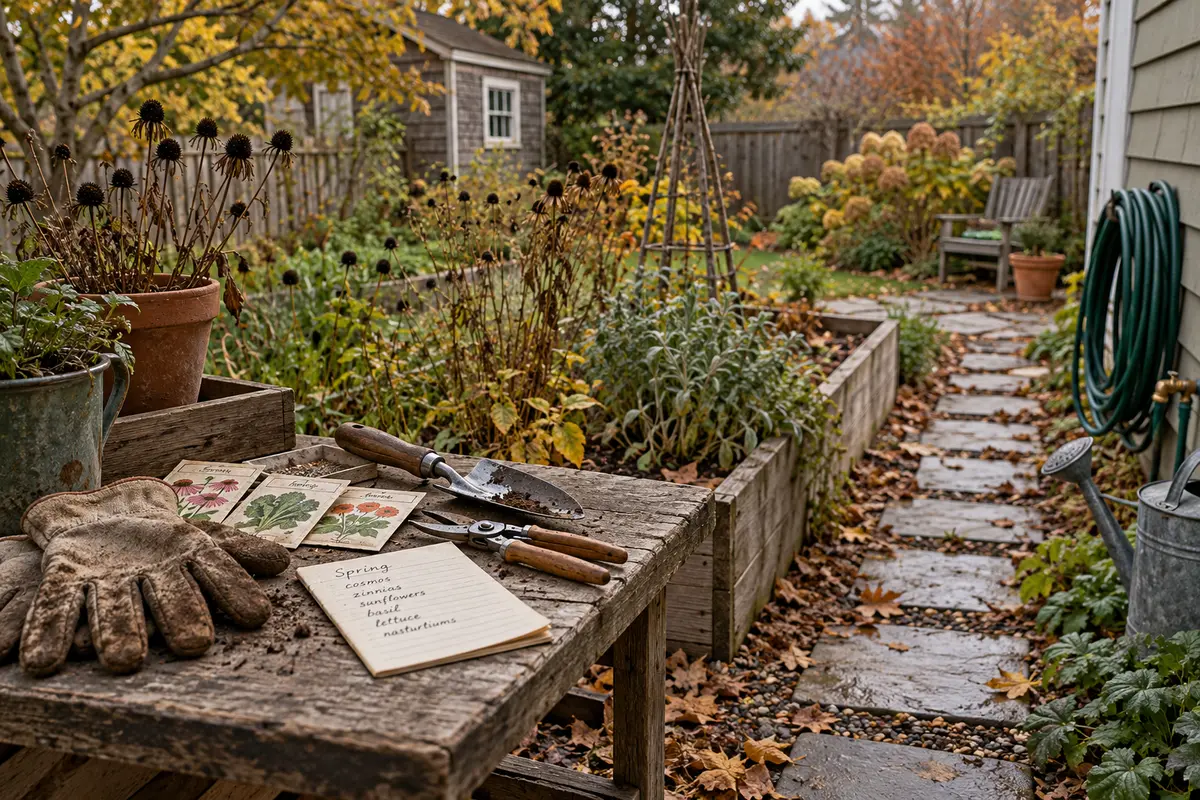
A gardener completes the drain and tool checks first, leaves one low-risk leaf refuge, moves a vulnerable pot under cover, and writes down which garlic variety was planted. The rest of the decorative cleanup waits for a dry afternoon.
Prioritize tasks that protect people and plants
Start with clear paths, stable steps, blocked drains, sharp tools, and hoses that could freeze or cause a trip. Then sort plants by their needs: some benefit from leaving stems and seed heads through winter, while diseased material or frost-sensitive plants need a different approach.
Do not cut back every perennial by habit. Climate, pest pressure, plant health, and wildlife goals matter. Check a regional extension source for pruning, disease disposal, and winter protection specific to your plants.
Leave a spring handoff you can act on
Record plant names or take photos when labels are missing, along with dates, container locations, watering notes, and pest or disease signs. Note which tools need repair and where supplies are stored.
Before bringing containers indoors or covering plants, check for insects, drainage, and cold tolerance. A patio container can freeze sooner than the same plant in the ground. Use local extension guidance for overwintering rather than relying on a hardiness-zone number alone.
Store tools and supplies safely
Clean soil from tools, dry them before storage, and keep sharp edges protected. Drain hoses and store them according to local freeze conditions. Keep fertilizers, pesticides, and fuel in labeled original containers, secured away from children, pets, and food.
Before bringing pots or plants inside, inspect them for pests and remove dead leaves. Use a location with suitable light and temperature for the plant rather than assuming a garage or basement will work for every species.
Separate cleanup, protection, and habitat choices
Think of the yard as several jobs rather than one large cleanup. Keep paths, steps, drains, and entrances clear so people can move safely and water can flow. Remove diseased plant material when regional guidance recommends it, and keep it out of home compost if the disease can survive there. For healthy stems, seed heads, and leaves, consider what can remain without blocking access, creating a fire concern, or conflicting with local rules.
A leaf refuge does not need to cover the whole yard. Choose a small bed or sheltered edge where leaves can stay in a loose layer and will not blow into drains or walkways. Xerces Society’s “Leave the Leaves” guidance explains how leaf litter can support overwintering insects; local climate, pest pressure, and property conditions still matter. Keep leaves away from foundations and vents, and do not put them where they create a slippery surface.
Make a container and water-line check
Before freezing weather, inspect pots, saucers, hoses, and irrigation lines. Empty water that could freeze in a container, and store hoses according to the manufacturer and local conditions. Some pots tolerate freezing better than others; check the material before leaving a valuable or waterlogged container outdoors. Move only plants that are appropriate to overwinter indoors and give them suitable light, temperature, and pest inspection.
Label plants whose names are uncertain and photograph beds before they change. That record can help with spring planning without pretending to identify every plant from a picture. Mark the tasks that depend on the forecast, such as moving a tender pot or turning off irrigation, so they do not get buried in a general checklist.
Leave a spring handoff
Write three short notes: what survived, what needs attention, and one change for next year. Include planting dates or varieties when known, and leave uncertain details blank. Put tools away dry, protect sharp edges, and store garden chemicals in original labeled containers away from food, children, and animals. A useful closeout is a safe path, protected supplies, and a clear spring starting point; the yard does not need to look bare.
Check local rules before burning or disposing of debris
Garden debris guidance varies by municipality and season. Do not burn leaves or plant waste unless local rules and current fire restrictions explicitly allow it. Many communities offer leaf collection or yard-waste composting; check the schedule before setting bags out. Avoid blowing leaves into streets or storm drains, where they can create a hazard or block water flow.
If you suspect a plant disease, use a local extension or municipal resource to identify safe disposal. Household compost piles may not reach temperatures that reliably destroy some pests or pathogens. Do not diagnose disease from a single photo when the plant or crop is valuable; document the symptoms and ask a qualified local source.
Make the closeout work for a rental or shared space
Check lease terms or ask the property manager before leaving leaves, moving containers, or changing shared beds. In a small balcony garden, prioritize secure pots, open drains, and wind exposure. A written note can capture which plants belong to whom and where shared tools should go. The goal is to leave a safer, easier-to-use space, not to impose a garden style on everyone.
Make a short priority list
If weather is changing quickly, write three levels: needs attention before the next freeze, useful to do when conditions allow, and optional. The first level might include clearing a blocked drain, securing a loose pot, or bringing in a frost-sensitive plant after checking local advice. Optional aesthetic cleanup can wait. Do not use a deadline from another region as if it applies to your yard.
Work in safe daylight and pause if paths are icy, visibility is poor, or the task requires lifting beyond your capacity. Ask for help with heavy containers and use stable footing. A garden closeout does not need to happen in one afternoon.