Halloween can be a favorite night, a complicated night, or both. Plan a version that fits the child who is there this year, including costume choices, route, comfort breaks, adult roles, food boundaries, and an alternate celebration if the usual plan stops working.
A good Halloween can be shorter
The child gets authentic choices where they have agency. Adults keep the safety responsibilities and clear limits. Writing the difference down helps everyone avoid debating the rules while already tired or standing in a crowd.
Set the night’s choices and adult roles
- Start with the child’s version. Ask what they want to keep, what they want to skip, and what would make the night feel easier. Record their words without editing them into an adult idea.
- Set the adult boundaries. Name the budget, safe route, supervision plan, allergy or food rules, and non-negotiable visibility needs before choosing details.
- Build two workable versions. Create a primary plan and a shorter fallback plan. Both should feel like a real celebration, not a punishment for needing a break.
- Practice the transitions. Try on the costume, rehearse the pause signal, and identify where the group will meet if separated. Keep practice short and reassuring.
- Close the night gently. Agree on how to handle candy, tiredness, and the next morning before the event. Avoid turning the end of the night into a surprise negotiation.
Offer versions instead of one fixed plan
- At-home celebration: Design a porch, movie, craft, or neighbor visit that offers the same favorite element without the full route.
- More than one child: Give each child one personal choice and use an adult-set shared route and time boundary.
- Changing plans: Use the short version without requiring the child to justify the change.
Reduce friction around food and transitions
- Calling a limit a choice: Offer options that are both safe and truly available.
- Forcing a sensory test: Let the child remove a piece during a trial. Comfort information is useful even if it changes the plan.
- Planning only for the ideal night: Write down the exit and recovery options while there is still time to use them.
Example: a low-key home-base Halloween
One child wants to trick-or-treat; another wants to stay home. The adults set two supervised plans, keep a shared check-in time, and let each child choose. No one has to prove they enjoyed the same version of Halloween.
Plan for a full night and a short night
Make the shorter version complete in its own right: perhaps a familiar costume, one decorated doorway, a few houses, and a favorite snack at home. Do not frame it as a consolation prize. Children are more likely to use an exit plan when it still includes something they value.
Set adult responsibilities before the event: who watches each child, who carries medication or allergy-safe food, who handles crossings, and who can take a child home early. Children choose within these guardrails, while adults remain accountable for safety.
Agree on food and transitions ahead of time
Explain what will happen to collected candy, including household rules about allergies, sharing, or when treats can be eaten. If a food allergy is involved, follow the child’s existing medical plan and verify labels.
Use a simple exit cue, such as one last house, a timer, or the child’s agreed signal. Give a brief warning, then follow through calmly. If weather, fatigue, or safety changes the plan, state the immediate reason and move to the agreed alternative.
Use the plan without overplanning
Write down only the decisions that would be hard to improvise: where to meet, who is supervising, what the child’s stop signal means, and how to get home. Leave preferences such as the exact order of houses flexible when conditions allow.
After Halloween, ask the child what they want to repeat and what they would change. Keep the answer short and use it as information for next year, not as a scorecard for how the holiday went.
Separate the celebration from the route
The night can contain more than one kind of participation. A child may want to choose a costume but skip door-to-door visits, greet neighbors from the porch, help hand out treats, or stay home with an adult. Treat these as legitimate versions of the evening. Do not promise a route before checking what the child actually wants and what adults can safely supervise.
For a group, decide in advance whether everyone stays together or whether two adults can support different plans. Children should know which adult is responsible for them and what to do if they cannot see that adult. Set a simple meeting point that is easy to describe, not a complicated map or a phone-based plan a child cannot use.
Make the safety choices specific
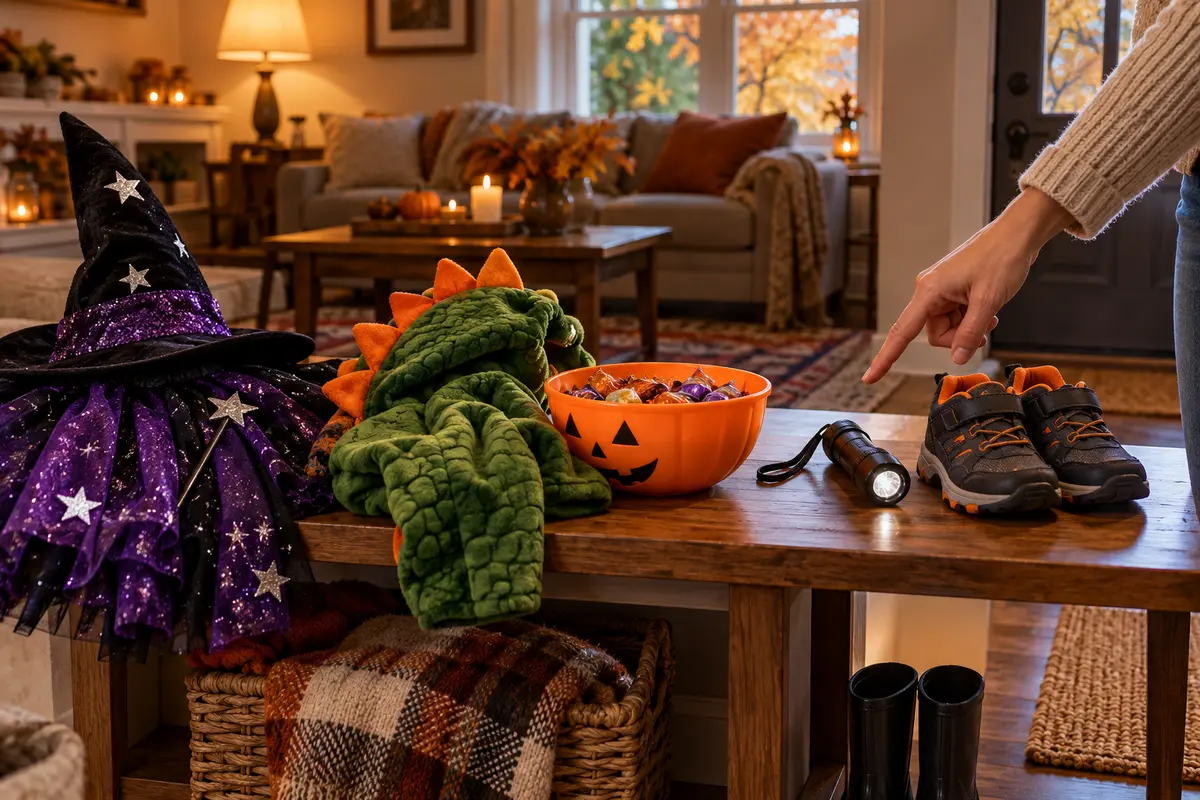
Check local event hours and any neighborhood traffic changes. Use sidewalks where available and cross at corners or crossings; adults should lead street crossings and keep children close enough to supervise. Choose shoes that fit and allow a steady walk. Add reflective details to costumes or bags and carry a light when visibility is low. Avoid costume pieces that drag or obstruct sightlines.
Agree on how the group handles food allergies before leaving. Follow the child’s existing care plan and check labels rather than relying on a quick visual guess. Keep prescribed medication with the responsible adult. If any part of the route is not accessible, too crowded, or poorly lit, choose a shorter route or a home-based option.
Use a route with a real stopping point
Choose a small loop near home, note the turnaround location, and estimate how long the walk will take at the child’s pace. A planned stop for water or a quiet break can be more useful than trying to complete a certain number of houses. Decide what “one more stop” means before the child is tired, then honor the agreed stopping cue.
Carry a phone, charged light, water, and any needed medication. Share the plan with another caregiver if the group separates. The purpose of planning is to reduce improvising in the dark, not to make a child earn a full route.
Make the fallback plan feel complete
Choose the favorite part of Halloween and keep that part in both versions. If the child cares most about seeing one neighbor, make that the short route. If they care about the costume, let the outfit be the celebration at home. This avoids presenting the shorter plan as a consequence for getting tired or overwhelmed.
Keep the backup simple enough to use without extra supplies: a decorated doorway, a favorite movie, a short visit, or handing out treats with an adult. If the child changes their mind, reflect the choice and move to the agreed version. Avoid promising that the night will be quiet or predictable; explain what adults can control and what may change.
Give the child a role that is not responsibility
A child can choose a costume detail, pick a break signal, or say whether a short visit sounds good. They should not be responsible for supervising siblings, managing an adult’s disappointment, or deciding whether a route is safe. Adults make those calls and explain them in calm, direct language.
If the child changes their mind repeatedly, reduce the number of decisions. Return to the two plans already agreed on and let them choose, or let the adult choose the safe option if time or conditions require it. The point of a flexible plan is to reduce pressure, not create a new negotiation every few minutes.