The October Hearth Kitchen is a decision system, not a rigid meal calendar. It helps you pair a reliable base with seasonal produce, plan when to cook once and reuse components, and leave a clear route for nights when the original plan no longer fits.
Repeat components, leave the nights flexible
A meal plan is useful when its preparation, storage, and household preferences are visible. Keep ingredients flexible, protect food safety, and leave room for a night when the planned meal no longer works.
Build a four-week supper rhythm
- Take inventory. Record the produce, pantry items, freezer portions, schedule, and any dietary limits that actually shape the coming week.
- Choose two anchor meals. Pick meals that share one ingredient or component but do not taste like duplicates. Give each an alternate side or seasoning path.
- Write the prep sequence. Identify what can be washed or chopped earlier, what must be cooked fresh, and who owns each step.
- Plan the leftover destination. Label when food will be chilled, eaten, or frozen. Refrigerate perishable food within two hours and use current USDA guidance for storage limits and reheating temperatures.
- Review and repeat. Mark the meals that were practical, not only the ones everyone liked. Reuse the method and change one ingredient next week.
Choose the right level of planning
- Very limited energy: Keep two assembly meals and one freezer backup. The system can shrink to a three-line note.
- Different preferences: Serve the base mild and offer finishers separately when practical.
- Tight budget: Build from what is already purchased and use substitutions before adding specialty ingredients.
Handle leftovers with care
- Planning too many new dishes: Use one familiar meal as an anchor each week.
- Saving leftovers without dates: Label contents and storage date, then follow current food-safety guidance.
- Treating the calendar as a promise: Move, replace, or drop meals when the week changes.
Example: cook once, serve two ways
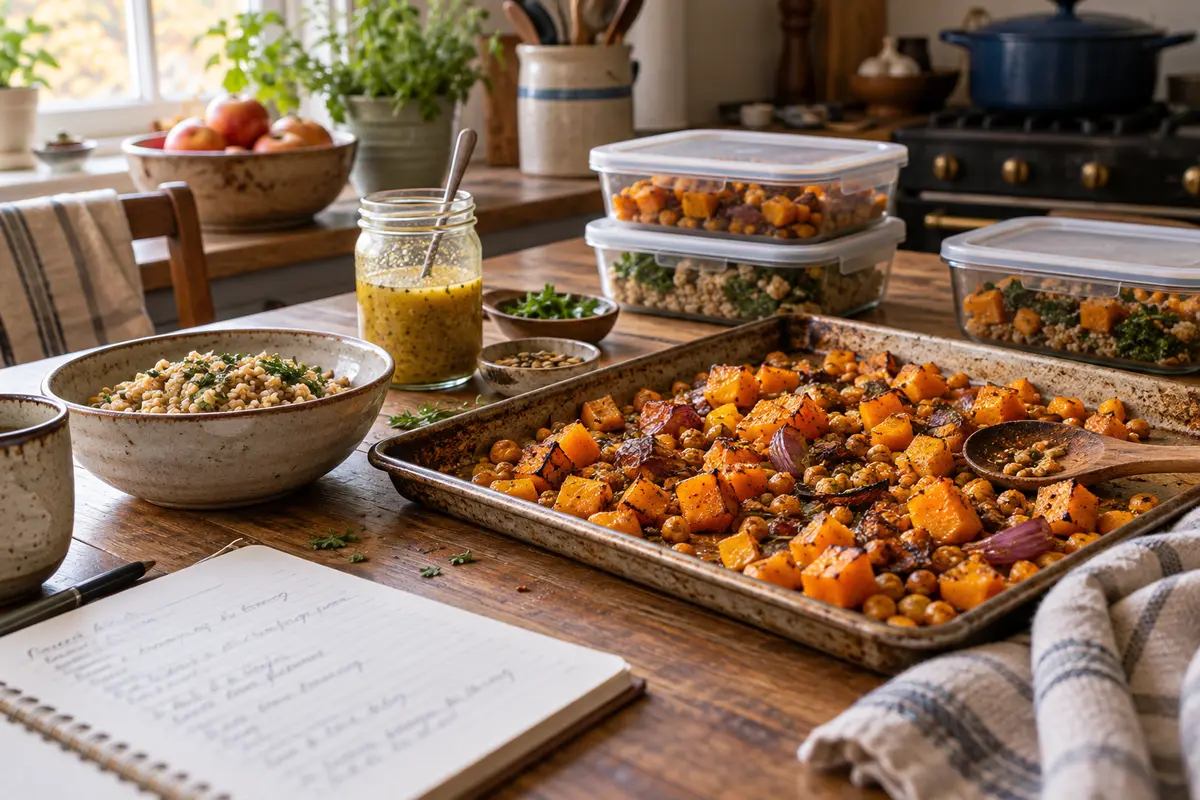
One roast squash tray becomes a first-night supper with chickpeas, a next-day grain bowl with a new dressing, and a freezer portion for a later week. The planned variety comes from changing the format and finish, not cooking three unrelated meals.
Build a flexible meal rotation
Choose a few base methods rather than four weeks of fixed recipes: roast vegetables, cook beans or grains, and make one soup or sauce. Reuse a component with a different texture or seasoning, such as roasted squash in a grain bowl and later blended into soup.
Put the actual schedule beside the plan. Use the most perishable ingredients early and label which cooked components will be eaten, frozen, or reused. If plans change, move a component forward or freeze promptly instead of trying to preserve the original calendar.
Cool and store leftovers safely
Refrigerate perishable food within two hours in shallow containers so it cools promptly. Keep the refrigerator at 40°F or below and freezer at 0°F. Date containers and use or freeze refrigerated leftovers within three to four days, following USDA Food Safety and Inspection Service guidance.
Reheat leftovers to 165°F, measured with a food thermometer, and reheat only the portion being served. If food has been left out too long or storage is uncertain, discard it instead of relying on smell or appearance. Consult the USDA FoodKeeper and FSIS guidance for current storage and reheating recommendations.
Make the plan resilient to schedule changes
Identify one meal that can be assembled from pantry or freezer ingredients when the day runs late. Keep it realistic and familiar. A fallback meal reduces pressure to use ingredients in a plan that no longer fits.
Write a “use first” note for produce likely to spoil, and leave one open meal slot for leftovers or changed plans. A flexible plan is successful when it reduces waste and last-minute decisions, not when every planned recipe is cooked.
Let the four weeks flex around real life
Think of the rotation as a set of choices, not a calendar that must be completed. A week might use one cook-once component, one quick assembly meal, one new recipe, and open space for leftovers or changed plans. If that already feels like too much, reduce it to two reliable dinners and a backup. The system should respond to available time, budget, equipment, and the people who will eat.
Write the main component beside the day it will actually be cooked. Then note where it goes next. A tray of squash can become supper with chickpeas, then a grain bowl; the second meal needs a different sauce or texture so it feels intentional. Do not plan to reuse leftovers beyond safe storage windows just because the calendar says so.
Keep food choices visible and flexible
Record allergies, dietary needs, strong dislikes, and texture needs in the planning note so they do not have to be rediscovered each week. When it is practical, serve a base meal with separate toppings or sauces. This can make one dinner easier to adapt without preparing several entirely different meals. Follow any medical dietary advice the household already uses.
Set a realistic “use first” list for produce that is likely to spoil, and leave one open slot in the week. The open slot is not a failure to plan; it gives leftovers, unexpected invitations, or a difficult day somewhere to land. A pantry fallback might be a soup, eggs and toast, or a freezer meal that the household already knows how to prepare.
Review cost and effort, not just variety
After each week, mark which meals used what you already had, which took longer than expected, and which left a useful component. If a plan depends on a specialty item, either use it in a second meal or leave it out next time. A four-week review is more useful than a perfect calendar when it leads to fewer duplicate purchases and less last-minute decision making.
For food safety, cool and store leftovers promptly, label dates, and use USDA FSIS guidance for time and temperature. Treat safe handling as part of the meal plan, not a note to remember after cooking.
Make component reuse safe and appealing
Cook only the amount of a base ingredient that you can use or freeze safely. Label the date and planned destination, and avoid leaving cooked grains, beans, or vegetables at room temperature while you prepare the next meal. Keep raw ingredients and ready-to-eat foods separate. If a component has been reheated once, plan to finish that portion rather than repeatedly cooling and warming the same container.
Variety can come from texture and finishing ingredients. Roasted vegetables can go into a warm bowl one night and a soup the next; the second meal still needs a fresh element such as lemon, herbs, or a crisp topping. If people prefer different levels of seasoning, keep the base mild and put strong condiments on the table.
Example four-week pattern
Week one, roast a tray of squash and use part of it with chickpeas; save one portion for a grain bowl. Week two, choose a soup or sauce that uses a pantry base and any vegetables marked “use first.” Week three, make a familiar meal and leave one night open for leftovers. Week four, review what remains in the pantry and choose one flexible supper rather than restocking every ingredient from scratch.
This is a shape, not a prescribed menu. Swap the meals, shorten the cycle, or repeat a favorite. If the household has a dietary restriction, choose base ingredients that fit the existing plan and check ingredient labels. The structure should reduce decision load without dictating what a family must eat.
Plan only as far ahead as you can shop and store food safely. The point of four weeks is to notice a pattern and reduce repeated decisions, not to keep cooked food for a month. Reassess ingredients and storage every week.