A costume can be imaginative and still scratch, overheat, block vision, or make the bathroom difficult. The best design is not the most elaborate one. It is the version a child can move in, tolerate, and change their mind about without a family argument.
Comfort is part of the costume design
Give the child meaningful choices inside adult-set safety and budget boundaries. Ask what part matters most: a cape, ears, color, sound, or carrying a prop. Once that priority is known, the rest can be simplified. A costume that can be removed in layers often works better than one that must stay perfect.
Fit-test the outfit before event night
- Ask before shopping. Invite the child to describe or draw the idea. Offer a few manageable options if they are unsure, and accept “I don’t know yet” as an answer.
- Run a comfort test. Try the base layer, shoes, headpiece, and any prop at home. Check walking, sitting, stairs, bathroom access, temperature, visibility, and sensory comfort.
- Keep the signature detail. Choose one recognizable element and let the rest come from ordinary clothes. This reduces cost and makes it easier to adapt.
- Pack a change plan. Bring a familiar layer, safe shoes, a small bag for the costume piece that may come off, and any approved comfort item.
- Agree on the exit cue. Let the child choose a signal for “pause,” “go home,” or “take this off.” Adults handle traffic, supervision, and the route.
Adapt the costume to the child’s needs
- Texture sensitivity: Use familiar clothing as the base and test seams or accessories in advance. Skip face paint if the child dislikes it.
- Weather change: Layer for the expected conditions and use a warm outer layer that can come off without destroying the costume.
- Budget limit: Build from the closet, borrow, or make one recognizable piece. Set the limit before browsing.
Solve discomfort before negotiating
- Assuming discomfort is defiance: Check the seam, temperature, fit, hunger, noise, or fatigue before negotiating.
- Forcing the photo version: Let the child move and play. The family picture can happen before the first uncomfortable accessory.
- Using visibility-blocking details: Keep the child’s sightline and safe walking footwear clear.
Example: a moth costume without a headpiece
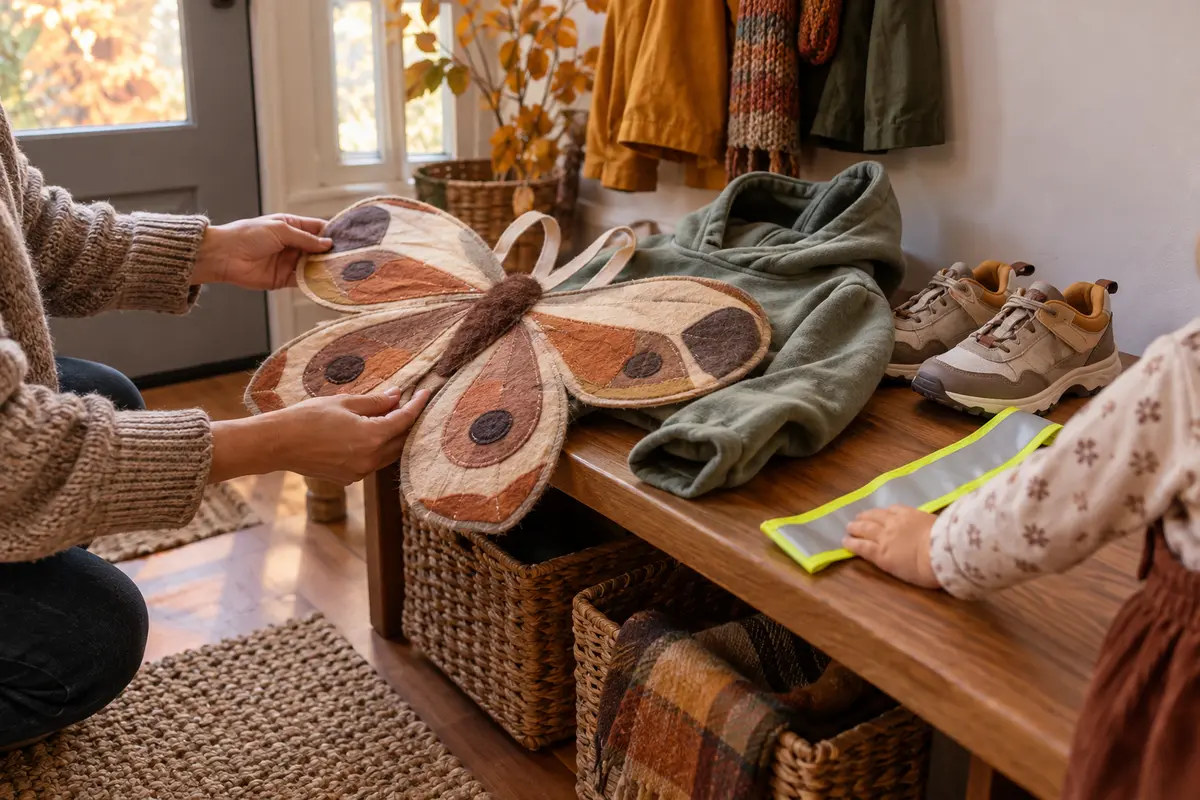
A child wants to be a moth but dislikes things near their face. The family makes soft wings from a hoodie and felt, skips the headband, and adds reflective tape to the back. The child tests the outfit on the stairs and chooses a pocket for a comfort object.
Build the costume around movement
Try the full outfit in the order it will be worn: base layer, costume, coat, shoes, headwear, and props. Have the child sit, climb a step, raise both arms, use the bathroom, and walk in dimmer light. Look for fabric that catches, masks that limit peripheral vision, and hems that can trip.
Use face paint only according to its label and test a small area of skin before event day. Keep props light and easy to set down. If a mask blocks vision, make a no-mask version that still feels recognizable, such as a hat, cape, or color detail.
A practical backup plan
Put a backup layer and comfort item in a small bag carried by an adult. Decide which costume pieces can come off without debate. Removing a scratchy collar or headpiece is useful information about the outfit, not a failure to follow the plan.
Check the weather and event timing on the day. Choose layers that can be added or removed without restricting movement. Adults remain responsible for visibility, traffic, and supervision even when children lead the design choices.
A final fit check
Try the costume again close to the event after any alterations. Check that shoes still fit with the intended socks and that coats, capes, or wings do not catch when the child turns. Pack safety pins or repair supplies only if an adult can use them safely.
Take a clear photo of the finished outfit for your own reference if the child agrees. It can help you reassemble layers later, but it is not a reason to keep any uncomfortable piece on.
A fit check that protects the fun
Do the first try-on several days before the event, while there is still time to change one thing. Check the outfit with the shoes and outer layer the child will actually wear. Ask them to walk, sit, raise both arms, look over each shoulder, and use the bathroom. A mirror is optional; how the costume feels during movement matters more than whether every detail looks exactly like a drawing.
Notice practical problems without making the child defend their preferences. A scratchy seam can be covered or removed. A cape that catches on a chair may need a shorter fastener. If face paint is part of the plan, use a product labeled for skin, follow its directions, and test it well ahead of the event. Stop if there is irritation. A mask that limits vision should be replaced with a safer recognizable detail.
Keep the adult jobs clear
Children can choose colors, characters, and which accessory matters most. Adults stay responsible for the budget, traffic, supervision, weather, visibility, and safe materials. Make the boundary concrete: “We can choose one new piece, and we will keep shoes you can walk in.” Then let the child make the choice inside it.
Pack a familiar layer and a bag for pieces that come off. Tell the child who will carry it and where the group will regroup. If the costume is homemade, attach reflective material in a way that does not block movement or damage a borrowed garment. The goal is to help the child be seen while keeping the clothing comfortable.
When the plan changes
If the child refuses a piece on event night, check comfort, temperature, fatigue, and fit before assuming the plan has failed. Keep one signature element and simplify the rest. If the outfit no longer feels right, an ordinary comfortable base layer can still be part of the costume. Ask what they want to keep; do not make participation depend on wearing the full design.
After the event, note what worked before packing the costume away. That record can make next year easier, but it is only useful if the child agrees to keep the outfit or reuse the idea.
Make the plan accessible without making it a project
A child may not want to make a detailed drawing or answer a long list of questions. Offer a short choice between two workable versions, then leave room for “neither.” For example, ask whether the wings should attach to a hoodie or be carried as a light prop. If the child uses communication support, include their usual way to say stop or request a change.
Check that any fastener can be opened quickly and does not sit against the skin in a painful way. Avoid pins and loose elastic where they could scratch or catch. If a costume includes a prop, agree where it goes when the child needs both hands free. Make a photo of the clothing layers only if the child is comfortable with it; the photo can help the adult pack, not serve as proof that the child should wear it.
A note about photographs and privacy
Make photographs optional. Some children love a costume photo; others would rather get outside or stay home. If you take one, let the child decide whether it stays private or is shared with relatives. Do not post a child’s name, school, or route alongside a public photo. A costume is for the person wearing it, not a performance adults are owed.