Garlic is usually planted in autumn, but the right timing depends on local climate and your winter pattern. A container makes the project possible on a patio, though it can freeze more quickly than ground soil. Start with regional extension guidance and a suitable seed bulb rather than assuming every grocery clove is adapted to your area.
Container size and drainage determine the plan
The container needs drainage and enough soil volume for roots. Planting direction, depth, spacing, and mulch guidance vary by region and hardiness conditions. Write down the instructions from your local extension service before you open the bulb.
Plant for your climate and pot
- Check your local planting window. Use a nearby university extension or trusted regional garden source. Record the recommended date or trigger and the expected first hard freeze.
- Choose suitable seed garlic. Select a variety recommended for your region. Avoid planting stock that may have been treated or may carry disease unless your local source says it is appropriate.
- Prepare a draining container. Use a pot with open drainage holes and a quality potting mix. Do not let the pot sit in standing water.
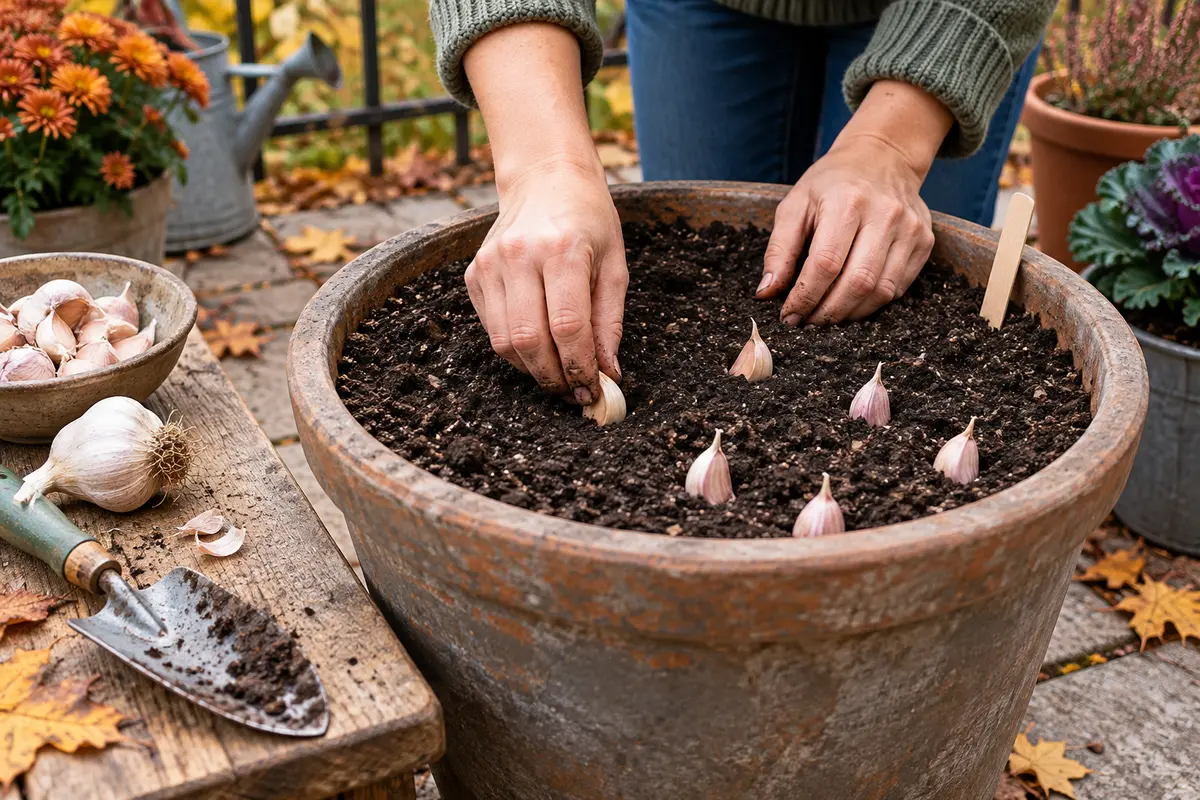
- Plant and label. Follow local depth and spacing recommendations. Plant cloves with the pointed end oriented as your local guide specifies, then label variety and date.
- Protect and observe. Water to settle the soil and apply the mulch guidance from your region. Monitor container moisture and winter exposure without keeping the mix waterlogged.
Adapt to balcony and winter conditions
- Very cold winters: A container may need protection because roots experience more temperature fluctuation than in-ground planting. Follow regional container guidance.
- Warm climates: Check the locally recommended variety and timing. Fall planting dates vary widely.
- No patio: Use a raised bed or wait for the next appropriate planting window rather than forcing a poor container setup.
Avoid common planting mistakes
- Copying a date from another region: Use local guidance; frost timing and cultivar needs differ.
- Using a pot without drainage: Waterlogged soil can damage cloves and roots.
- Planting one grocery clove as a guarantee: Variety, treatment, and disease status may be unknown.
Example: one large patio container
A gardener in the upper Midwest checks the local university extension calendar, chooses a recommended hardneck variety, and records the planting trigger. The gardener uses a draining container and notes that it may need winter protection because pots experience greater temperature swings.
Choose a pot that can carry roots through winter
Use a sturdy container with drainage holes and enough depth for root growth recommended by your regional source. A large pot holds moisture and temperature more steadily than a small one, but is heavier to move. Set it where drainage will not freeze across a walkway.
Fill with fresh, free-draining potting mix rather than dense garden soil. Plant firm, healthy seed garlic suited to your area. Grocery garlic may be treated to delay sprouting or may be poorly adapted to local disease and winter conditions.
Winter care and harvest expectations
Water after planting until the mix is evenly moist, then monitor the container rather than following a fixed calendar. Rain, wind, and shelter change how quickly a pot dries. Do not keep the mix saturated. Protect the pot from severe exposure using local extension recommendations while preserving drainage and airflow.
Garlic growth and harvest timing vary by variety and region. Keep the label with the container and note planting date, variety, winter conditions, and spring growth. If shoots emerge early or the pot freezes hard, check regional advice before changing mulch or moving it.
Prevent water and temperature problems
Raise the container slightly on pot feet or bricks so drainage holes do not sit in pooled water. Check that the pot is not exposed to repeated thawing and freezing beyond what your variety can tolerate. Do not wrap it in plastic in a way that traps moisture.
In spring, resume watering when growth and weather call for it, keeping the mix evenly moist but not waterlogged. Yellowing leaves, poor drainage, or soft cloves can signal a problem; compare with local growing advice before applying fertilizer or pesticide.
Choose planting time for your region
“October” is not a universal garlic planting date. Garlic is commonly planted in fall in cold-winter regions, but the right window depends on local soil conditions, climate, and the variety. Use a nearby university extension guide for timing, and check the variety's recommended planting depth and spacing. The University of Minnesota Extension advice, for example, is written for Minnesota conditions and should not be copied as a calendar for a warmer or milder region.
Use healthy, firm cloves from a seed supplier or saved garlic known to be suitable for planting. Grocery-store bulbs can be treated to slow sprouting and are not always adapted to local growing conditions. Separate the bulb into cloves shortly before planting and keep the papery skin intact.
Set up a container that can drain
Choose a wide, sturdy container with generous drainage holes. Garlic roots need depth as well as room between cloves; check local guidance for the variety and container size instead of packing the pot tightly. Raise the pot slightly if it sits on a surface where water could pool, and use a good-quality potting mix rather than dense garden soil. Do not leave the container standing in a saucer of water.
Water the mix after planting so it is evenly moist, then monitor it according to rainfall and temperature. Container soil can dry or freeze faster than a garden bed. Mulch can buffer temperature swings, but keep it loose and follow regional recommendations. Do not bring a cold-hardy outdoor crop into a warm room simply to protect it from ordinary seasonal cold.
Label now, troubleshoot in spring
Write the variety, supplier, planting date, and number of cloves on a weather-resistant label. That small record helps you distinguish winter loss from a slow spring start and makes next year's spacing easier to plan.
If shoots appear in fall, do not assume the crop is ruined. Check regional advice for your climate, avoid pulling the cloves up to inspect them, and keep the container from waterlogging. In spring, remove weeds gently and water during dry periods. Harvest timing depends on the variety and the condition of the leaves; use local extension instructions and cure the bulbs in a dry, ventilated place before storage.
Troubleshoot the container through the season
If water runs straight through the mix, check that the soil is moist throughout rather than only at the surface. If it stays soggy, confirm the drainage holes are open and the container is not sitting in pooled water. Strong wind can dry a pot quickly, while a sheltered balcony may keep it warmer than the surrounding garden. Check the container itself after freezes; thin or porous pots may crack when wet soil expands.
Garlic tops can emerge before winter in some regions. Do not cut them off automatically. Follow local extension recommendations, protect the container from repeated freeze-thaw exposure where appropriate, and avoid moving it into a heated room. Record what you observe so you can compare the result with your region's guidance next season.
Keep a realistic first-year expectation
Container garlic can produce smaller bulbs than garlic grown in a bed, especially when the pot is shallow, crowded, shaded, or repeatedly dry. That does not make the experiment a failure. Record the number of cloves planted and harvested, then adjust spacing, variety, or container depth the following year.
Do not use the same potting mix indefinitely without refreshing it, and avoid planting into a container with root disease or persistently poor drainage. If you use fertilizer, follow the product label and local recommendations; more is not automatically better. The plant needs time and suitable conditions, not a complicated feeding schedule.