A successful Halloween route does not have to cover every block. It has to keep the adults oriented, give the child a predictable next step, and leave room to stop when the fun changes into too much. Decide the route while everyone is calm, then adjust it without treating the original plan as a promise.
The child sets the pace inside adult safety
The route has three useful anchors: where you start, where you can pause, and how you get home. A familiar loop is often easier than an ambitious destination. Adults keep responsibility for traffic, street crossings, and supervision. Children can choose which safe direction to take at a fork or when they are ready to turn back.
Choose a route with a clear return point
- Check the local event details. Confirm hours, sidewalks, traffic conditions, accessible routes, and whether homes are participating. Use an official neighborhood or city notice when available.
- Choose a short loop. Pick a route with a clear turnaround point and a nearby quiet place. Tell the child how many blocks or landmarks are in the plan.
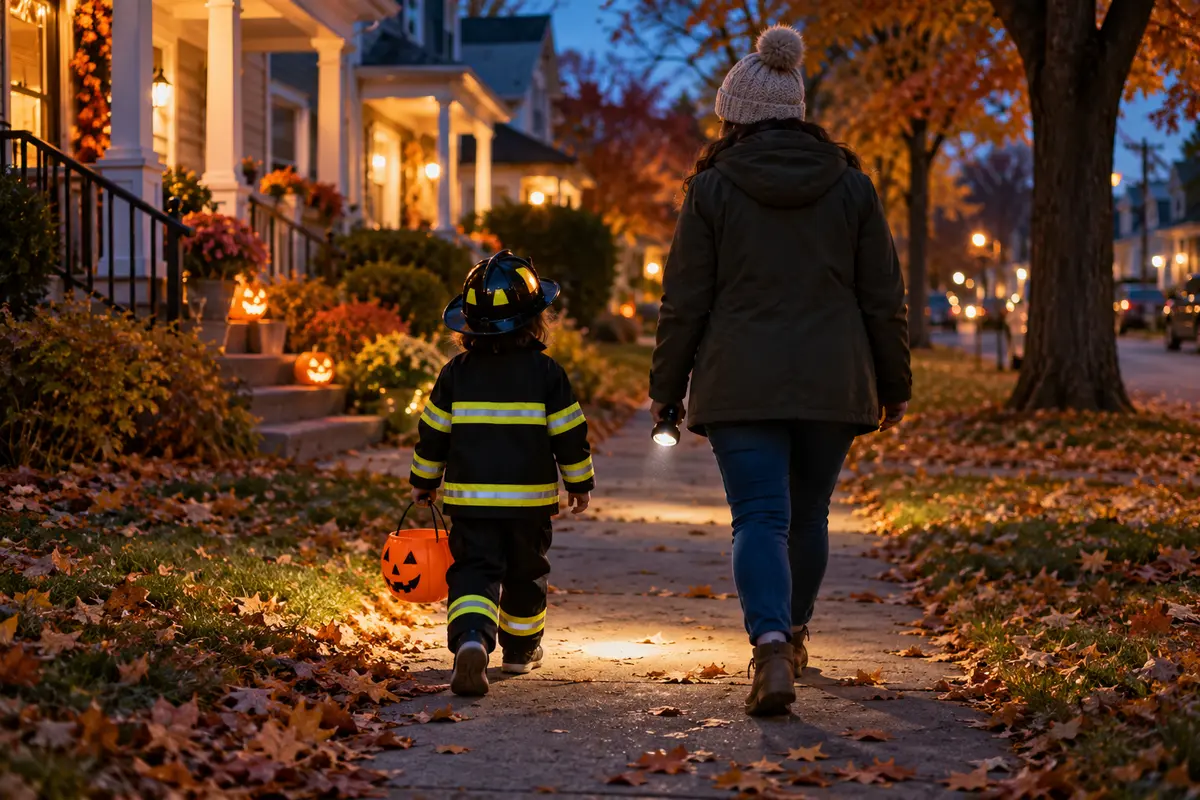
- Make everyone visible. Check that shoes fit, costumes do not drag, and outer layers preserve movement. Add reflective elements and use a flashlight or glow item.
- Agree on signals and roles. Name the adult responsible for the group, the signal for stopping, and the meeting point if separated. Review street crossing expectations before leaving.
- Leave while it is still working. The route is complete when your agreed time or child’s capacity is reached. A shorter night can be a full celebration.
Adapt for mobility, weather, and energy
- Stroller or mobility support: Choose curb cuts, smooth surfaces, rest points, and a route that does not require carrying the child or device.
- Noise or crowds: Start earlier if the local event allows it, choose quieter streets, and keep a familiar exit path.
- Children with different stamina: Set a short shared route and make a second optional loop for people who want to continue, with clear adult supervision.
Keep visibility and supervision explicit
- Using distance as the success metric: Measure by comfort, safety, and connection, not the number of houses.
- Adding route decisions mid-crowd: Use the pre-agreed pause or home signal before fatigue becomes a conflict.
- Letting costumes obscure safety: Check sightlines, footing, and reflective visibility in the actual evening light.
Example: three stops and a planned check-in
A family chooses six houses on a well-lit loop, identifies a neighbor’s porch as the pause point, and carries a small flashlight. After the fourth stop, the child asks to go home. The adult follows the exit plan, and the child still gets to choose which treat to open first.
Plan for visibility and separation
Choose a meeting point that is easy to identify and away from the street. Each child should know the accompanying adult’s name and how to ask an event worker or trusted adult for help if separated. Adults agree who is watching each child before leaving.
Use reflective material visible from more than one direction, comfortable shoes, and a flashlight. Check that masks or face paint do not block vision. An adult leads street crossings and stays responsible for traffic and supervision.
Use a route with options
Pick a loop with an easy way home, accessible sidewalks or curb cuts, and a quiet pause point. Do not promise that every house will participate. If the sidewalk is crowded, move to a safe waiting place before deciding whether to continue.
Check municipal event hours and weather on the day. Keep the child’s stop signal easy to use and honor it promptly. If a child is too tired or distressed to continue safely, the adult ends the route and follows the return plan.
Pack for the conditions
Carry water, any required medication, and a charged phone. If using face paint or a mask, bring a way to remove it comfortably. Keep the child’s hands as free as possible and avoid props that could catch on costumes or obstruct movement.
For children who use mobility equipment, check route surfaces and curb cuts ahead of time and consider how decorations or crowds may narrow the path. Choose an accessible turnaround point and do not treat the number of houses as the goal.
Pick a route a child can actually use
Walk or map the route in daylight before the event if you do not know the area. Look for sidewalks, curb cuts, lighting, traffic crossings, uneven surfaces, and places to pause. Keep the loop short enough that a tired child can get home without being carried farther than the caregiver can manage. Do not assume every home or building welcomes visitors; use public event guidance and respect posted requests.
Explain the route using visible landmarks: “We turn around at the library” is easier to remember than a street-by-street sequence. Adults hold the map and make crossing decisions. Children can choose which side of a safe block to visit or when to take a planned break, within adult supervision.
Agree on what happens if the group separates
Give the child a simple instruction suited to their age: stay where they are with a trusted adult, go to a known event helper, or enter a participating business only if that is part of your family’s plan. Practice the instruction calmly in daylight. Avoid relying on a young child’s phone or memorizing several emergency steps.
Use a meeting point at a well-lit, familiar location and decide who carries the phone, light, and necessary medication. For children who use mobility equipment, sensory aids, or communication support, plan the route around actual access needs and identify a quiet place to pause. Confirm that costume layers do not interfere with walking or equipment.
Let the child end the route
Set a stopping cue before you leave: a time, a number of blocks, or the child’s request to head home. Adults can still end the outing for weather, traffic, or safety. If the plan changes, say why in plain language and move to the backup plan without bargaining over whether the child has “done enough.”
Keep the alternative real: a porch visit, a short loop, or a favorite snack at home. A route plan works when it supports connection and safe return, not when it maximizes the number of houses.
Plan for daylight, weather, and crowd changes
Check the local event schedule and weather on the day. A route that works before dusk may feel different when sidewalks are crowded or rain makes a curb hard to see. Bring a small light and reflective detail, and keep costumes and bags from dragging. If the weather becomes unsafe, use the stopping point and move to the backup celebration.
Do not share a child’s route or identifying details publicly. If multiple caregivers are involved, make sure everyone has the same plan and knows who is responsible for each child. For a child who may not reliably approach an unfamiliar helper, choose and practice a plan that fits their communication and support needs.
A practical carry list
Keep the bag small: a light or reflective accessory, a charged phone with the caregiver, needed medication, water, and a familiar comfort item if the child wants one. Carry only what an adult can manage while supervising. Avoid relying on candy or a phone as the only way to keep a child close or engaged.
Before leaving, make sure the child knows the adult's name and what to do if they cannot see them. For children who communicate differently, agree on a support plan with caregivers and use the child's familiar communication method. A route can be shortened at any point; the child's energy and the conditions matter more than completing the map.