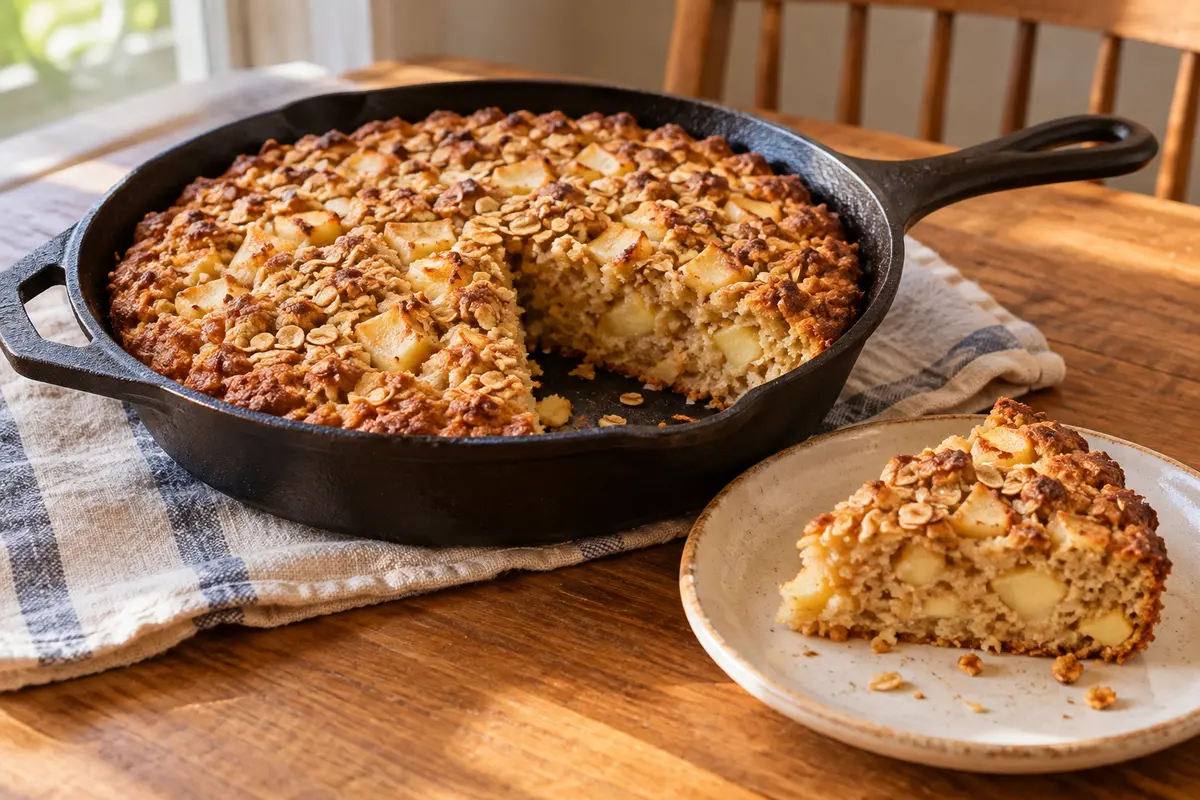
This apple-oat skillet cake is meant for a small gathering or a quiet breakfast-for-dinner. The oats give the crumb a hearty texture while chopped apple keeps the center tender. A well-greased skillet develops a browned edge in the oven, but the recipe can also use an 8-inch square pan.
Ingredients and equipment
- 1 cup rolled oats
- ¾ cup all-purpose flour
- 1 teaspoon baking powder
- ½ teaspoon ground cinnamon
- ¼ teaspoon salt
- 1 large egg
- ½ cup milk
- ⅓ cup brown sugar
- 3 tablespoons unsalted butter, melted
- 1 teaspoon vanilla extract
- 1 medium apple, diced
Method with doneness cues
- Heat oven to 350°F. Grease a 9-inch oven-safe skillet or 8-inch square pan.
- Whisk oats, flour, baking powder, cinnamon, and salt. Separately whisk egg, milk, sugar, butter, and vanilla.
- Fold wet ingredients into dry just until combined. Fold in diced apple. Rest 5 minutes and spread in pan.
- Bake 25–32 minutes until the top is set and a tester near center shows no wet batter. Begin checking at 23 minutes for a square pan.
- Cool at least 10 minutes before slicing. Refrigerate leftovers within 2 hours.
Texture and doneness troubleshooting
Fold the batter only until the flour is moistened and no large dry pockets remain. A few small lumps are fine. Overmixing develops more gluten and can make the cake tough or compact; it does not call for a smaller pan. If you have overmixed, stop stirring, fold in the apple gently, and bake as directed. The crumb may be firmer.
Diced apple releases moisture, so check the center in more than one place. The top should look set, the edge browned, and a tester should show moist crumbs but no liquid batter. If the surface browns before the middle sets, loosely tent with foil and continue baking in short increments.
Pan, apple, and storage notes
Cut apple into roughly ¼-inch pieces so it softens within the bake time. A juicy apple or deeper pan may need extra time. A dark metal pan can brown the edges faster than glass or a light-colored pan, so check early. The skillet handle stays hot after baking; use a dry mitt and keep it away from the table edge.
Refrigerate leftovers in a covered container within two hours. Rewarm a slice briefly in a low oven or toaster oven for better texture. For allergy or dietary needs, check substitute labels, especially oats and flour blends.
Serving and adapting the batch
For a less sweet breakfast cake, reduce the brown sugar modestly rather than removing it entirely, since sugar also affects moisture and browning. Add chopped nuts only if they are safe for everyone eating; fold them in with the apple so they are distributed evenly.
Serve slices with plain yogurt, warm milk, or fruit. Let the pan cool before washing, especially if it is cast iron. Avoid pouring cold water into a very hot skillet, which can cause thermal shock or damage the pan.
Before you start: choose the pan and check the center
Use an oven-safe 9-inch skillet or an 8-inch square pan. A shallow pan bakes faster than a deep one, so begin checking early rather than relying on a single clock time. If the skillet has a narrow base or unusually high sides, the middle may need longer than the edges. Set a timer for 23 minutes, then check the center with a thin tester. Moist crumbs are fine; wet batter means it needs more time.
A soft center is not the same as an underbaked one. Let the cake rest for at least ten minutes after baking so the oats can settle and the slice can hold together. It will be tender and more spoonable while warm, then firmer as it cools. For a crisp edge, grease the pan well and leave the batter in an even layer rather than piling it in the middle.
Make a few useful adjustments
Dice the apple into small pieces so it softens at the same pace as the cake. A tart, firm apple gives more contrast; a softer variety makes a sweeter, more blended texture. If the apple is especially juicy, pat the pieces dry before folding them into the batter. Do not add extra liquid to compensate for dry-looking oats until the mixture has rested for five minutes.
For a less sweet result, reduce the brown sugar modestly and expect a less tender crumb. For a dairy-free version, use a neutral plant milk and a baking-appropriate butter substitute, checking that the product is suitable for baking. These swaps change flavor and browning, so treat them as options to test rather than guaranteed identical results. Keep the cinnamon optional if you want the apple to lead.
Serve, store, and use leftovers
Serve warm with plain yogurt or a spoonful of cream if you like. The cake is also good at room temperature, which makes it practical for a small breakfast table or an afternoon snack. Refrigerate leftovers within two hours in a covered container and use within three to four days; reheat only the portion you plan to eat. The center will soften again when warmed, while the edge loses some of its first-day crispness.
The recipe is intentionally modest. It is a skillet cake, not a laminated pastry or a showpiece that needs perfect slices. If it breaks while warm, spoon it into bowls and serve it as a soft baked pudding.
Ingredient notes that prevent a disappointing texture
Old-fashioned rolled oats give the cake a more distinct bite. Quick oats soften faster and can make the crumb less textured. Measure flour by spooning it into the cup and leveling the top rather than packing it down. Too much flour makes a small skillet cake dry, while too much apple can leave a damp pocket at the center.
Let the batter rest briefly before baking so the oats begin to absorb moisture. If the top browns before the middle sets, lower the oven temperature slightly and continue checking in short intervals. Do not place a hot skillet on a cold or wet surface; use a dry trivet and warn anyone nearby that the handle stays hot. Transfer leftovers only after the pan is safe to handle.
Troubleshooting common bake problems
If the edges are browned but the center is still wet, tent the pan loosely with foil and continue baking in short intervals. Avoid covering it tightly because trapped steam softens the top. If the cake is dry, check whether the flour was packed into the measuring cup or the pan was smaller and the batter deeper than expected. Record the pan and bake time that worked in your own kitchen.
The recipe can be mixed by hand; a mixer is unnecessary. Stir only until the dry ingredients disappear. Overmixing after flour is added can make the cake tougher. Keep the eggs and milk close to room temperature if convenient, but do not delay baking if they are cold. The pan and oven will matter more.
Use the cake within the storage window and discard it if its handling time is uncertain. Food safety should not depend on tasting a questionable leftover. If you are baking for someone with an allergy, check every ingredient label and avoid cross-contact with shared utensils or pans.
For a clean slice, run a thin knife around the edge after the brief rest and cut through the center with a sharp knife. Wipe the blade between cuts if the warm apple makes it sticky. If you prefer a spoonable dessert, serve it directly from the pan after the resting time instead of waiting for neat slices.