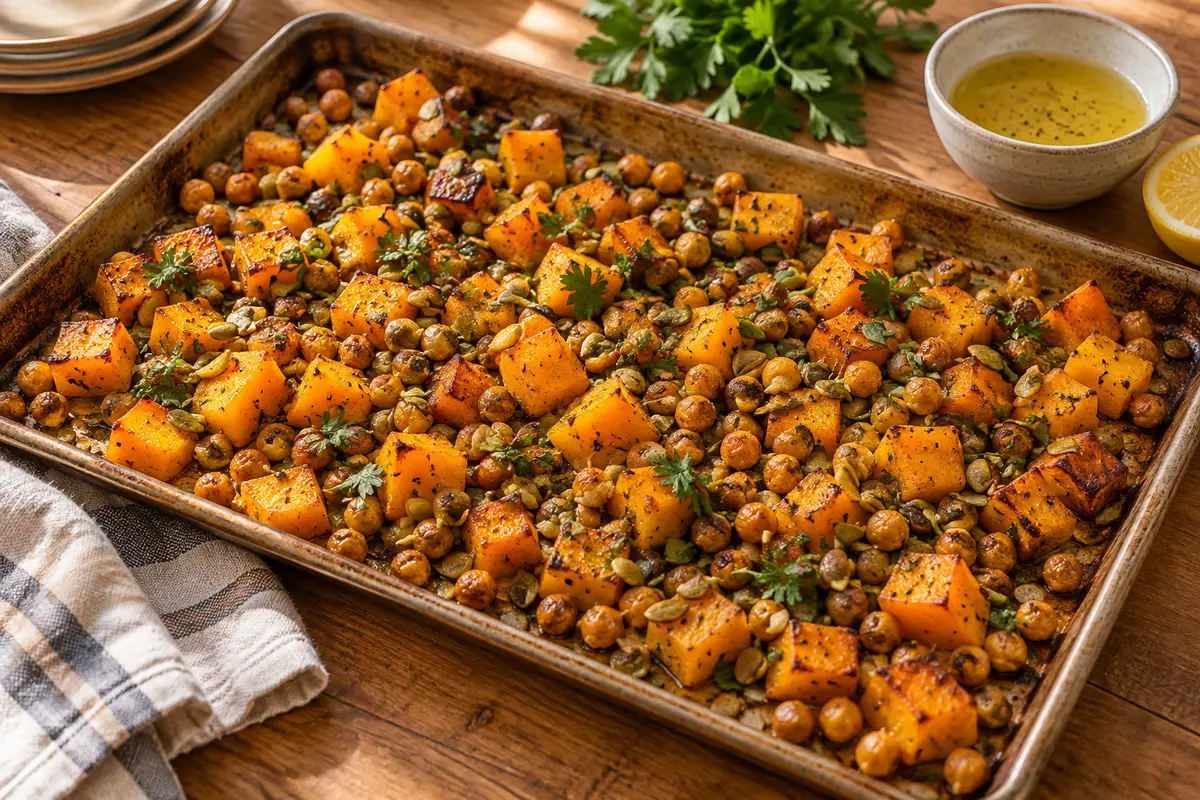
This sheet-pan supper is built around one useful contrast: tender squash and crisp-edged chickpeas. Keeping them in separate zones lets you pull the chickpeas when they brown while the squash finishes softening. A lemon dressing and toasted seeds add brightness and texture at the table.
Ingredients and equipment
- 1½ pounds peeled winter squash, cut into ¾-inch cubes
- 2 (15-ounce) cans chickpeas, drained, rinsed, and dried
- 2½ tablespoons olive oil, divided
- ½ teaspoon kosher salt for squash, plus ¼ teaspoon for chickpeas
- ½ teaspoon smoked paprika
- ½ teaspoon ground cumin
- 2 tablespoons pumpkin seeds, toasted
- 2 tablespoons chopped parsley
- 2 tablespoons olive oil for dressing
- 1 tablespoon lemon juice
- 1 teaspoon Dijon mustard
- Black pepper to taste
Method with doneness cues
- Heat oven to 425°F. Prepare a rimmed sheet pan.
- Toss squash with 1½ tablespoons oil, ½ teaspoon salt, and smoked paprika. Toss dry chickpeas with remaining tablespoon oil, ¼ teaspoon salt, and cumin.
- Spread ingredients in separate uncrowded zones. Roast 25 minutes, turn, then roast 8–15 minutes until squash is fork-tender and chickpeas have browned edges.
- Whisk dressing oil, lemon juice, Dijon, and pepper. Taste and adjust.
- Finish with pumpkin seeds and parsley. Serve dressing at the table. Refrigerate leftovers within 2 hours.
Control browning with pan spacing
Use a rimmed pan large enough to keep squash and chickpeas in a single layer. Crowding traps steam, so ingredients soften before their edges color. If the pan is small, divide between two pans and rotate their oven positions partway through.
Cut squash into similar-sized pieces so they finish together. Pat chickpeas dry before oiling. Roast until squash yields easily to a fork and chickpeas show browned spots; ovens and varieties differ, so rely on texture cues as well as time.
Finish and serve with texture in mind
Toast pumpkin seeds in a dry skillet over medium-low heat, stirring until fragrant and lightly colored. Move them to a plate promptly because residual heat can scorch them. Add seeds after roasting so they stay crisp.
Keep lemon dressing separate until serving, especially if there will be leftovers. Refrigerate cooked food within two hours in a shallow container. Reheat uncovered in a hot oven or skillet for better surface texture; the microwave is convenient but softens chickpeas.
Make the meal work for different tables
Serve the dressing, seeds, and parsley separately so people can choose how much to add. For a heartier plate, pair the roast with rice, couscous, or flatbread. Keep allergen-bearing toppings separate and label them when serving a group.
If substituting a winter squash, cut dense varieties into smaller pieces and check tenderness before removing the pan. Use a clean utensil for serving and refrigerate leftovers promptly.
Prepare the tray so the vegetables brown
Heat the oven fully before the tray goes in. Dry the rinsed chickpeas well with a clean towel; surface water slows browning. Cut the squash into pieces of similar size so the centers finish together. If the pieces are crowded, use a second pan. A crowded tray traps steam and can leave squash soft before the chickpeas become crisp.
Keep the squash and chickpeas in separate zones because they finish at different rates. Check the squash with a fork and the chickpeas by their browned edges, then remove each when it is ready. Exact timing depends on the squash variety, cube size, pan, and oven. If the chickpeas are still soft, give them a few more minutes rather than overcooking the squash.
Finish for contrast
The dressing should be bright and lightly creamy from mustard, not thick. Whisk the oil in gradually, then taste a spoonful with a piece of squash. Add lemon or salt only after tasting the whole combination. Toast pumpkin seeds in a dry pan over medium heat, shaking often, until fragrant; transfer them to a plate so residual heat does not burn them.
Add seeds just before serving to preserve their crunch. Keep the dressing on the side if you expect leftovers. A little chopped parsley adds freshness, but the dish works without it. The cumin and smoked paprika are gentle background notes; adjust them rather than adding several new spices at once.
Serve and save safely
The tray is satisfying as a vegetarian main with grains or greens, and works as a side alongside soup or eggs. For a different second meal, spoon the leftovers into a grain bowl or tuck them into a wrap. Store perishable leftovers in shallow containers and refrigerate within two hours. Reheat only the portion you need; the chickpeas soften after storage, so scatter fresh seeds on top at the table.
If serving people with food allergies, check the dressing ingredients and seed choice. Keep the seeds separate when needed and label the dish clearly.
Keep the texture in the leftovers
The roasted pieces will soften in the refrigerator, especially if the dressing is mixed through. Store the dressing and toasted seeds separately when you can. Let hot food stop steaming heavily, then transfer it to shallow containers and refrigerate promptly. Do not leave a crowded tray on the counter for hours while waiting for it to cool completely.
For the best second serving, reheat the squash and chickpeas on a tray or in a skillet until hot, then add fresh seeds and dressing. A microwave is convenient, though it will soften the chickpeas further. If you make the dish ahead, under-season slightly and finish with salt and acid after reheating; cold storage dulls flavor and the lemon can fade.
Full recipe flow and practical adjustments
Heat the oven to 425°F and place a rack in the upper-middle position. Peel and cut the squash into roughly three-quarter-inch cubes. Pat the drained chickpeas dry while the oven heats. Coat the squash with oil, salt, and smoked paprika; coat the chickpeas separately with oil and cumin. Keep the seasonings on their own ingredients so you can adjust each before combining.
Spread everything in a single layer on a rimmed sheet pan, leaving a little room between pieces. Roast for about 25 minutes, turn the pieces, and continue until the squash is fork-tender and the chickpeas have browned edges. Start checking early if the cubes are small or your oven runs hot. If the pan is crowded, use two pans rather than extending the cooking time until the squash turns mushy.
Whisk the olive oil, lemon juice, Dijon, and black pepper in a small bowl. Taste with a piece of squash because the final balance depends on the sweetness of the squash and the salt in the chickpeas. Add lemon or salt a little at a time. Toast pumpkin seeds in a dry skillet, stirring frequently, and move them off the hot pan as soon as they smell nutty. Scatter seeds and parsley over the tray just before serving.
For a milder version, leave out smoked paprika and offer it at the table. If the squash is very sweet, use a little more lemon. If you do not have pumpkin seeds, leave them out or use another seed the household can safely eat. The dressing can be omitted for a simpler tray meal. These are flavor adjustments; they do not change the basic roasting method.
This dish is easiest to serve soon after roasting, when the chickpeas have their best texture. Pair it with cooked grains, greens, or flatbread for a main meal. For a side, the same tray can accompany soup or eggs. Keep any dressing separate from the stored vegetables and add fresh seeds after reheating.
If you are making a double batch, use two trays and rotate their positions if your oven browns unevenly. Keep the pieces in a single layer; stacking them will steam instead of roast. Let the food cool briefly before packing, then refrigerate promptly.