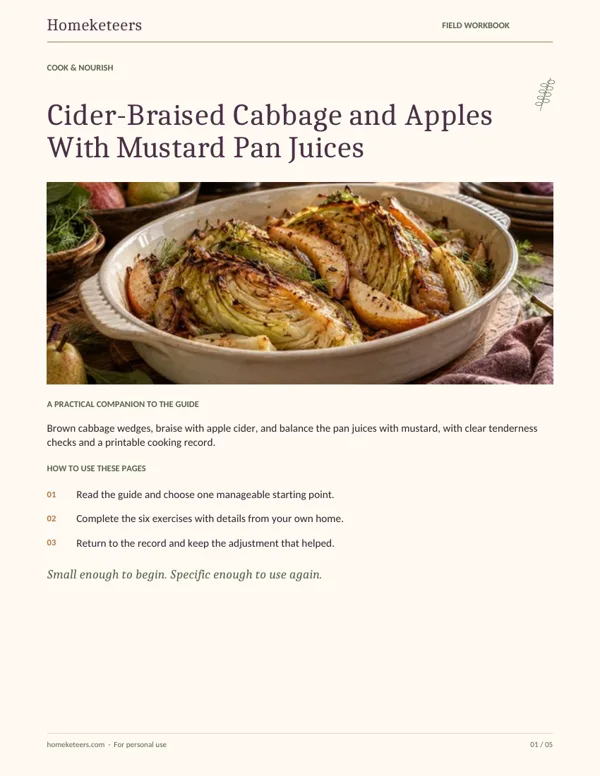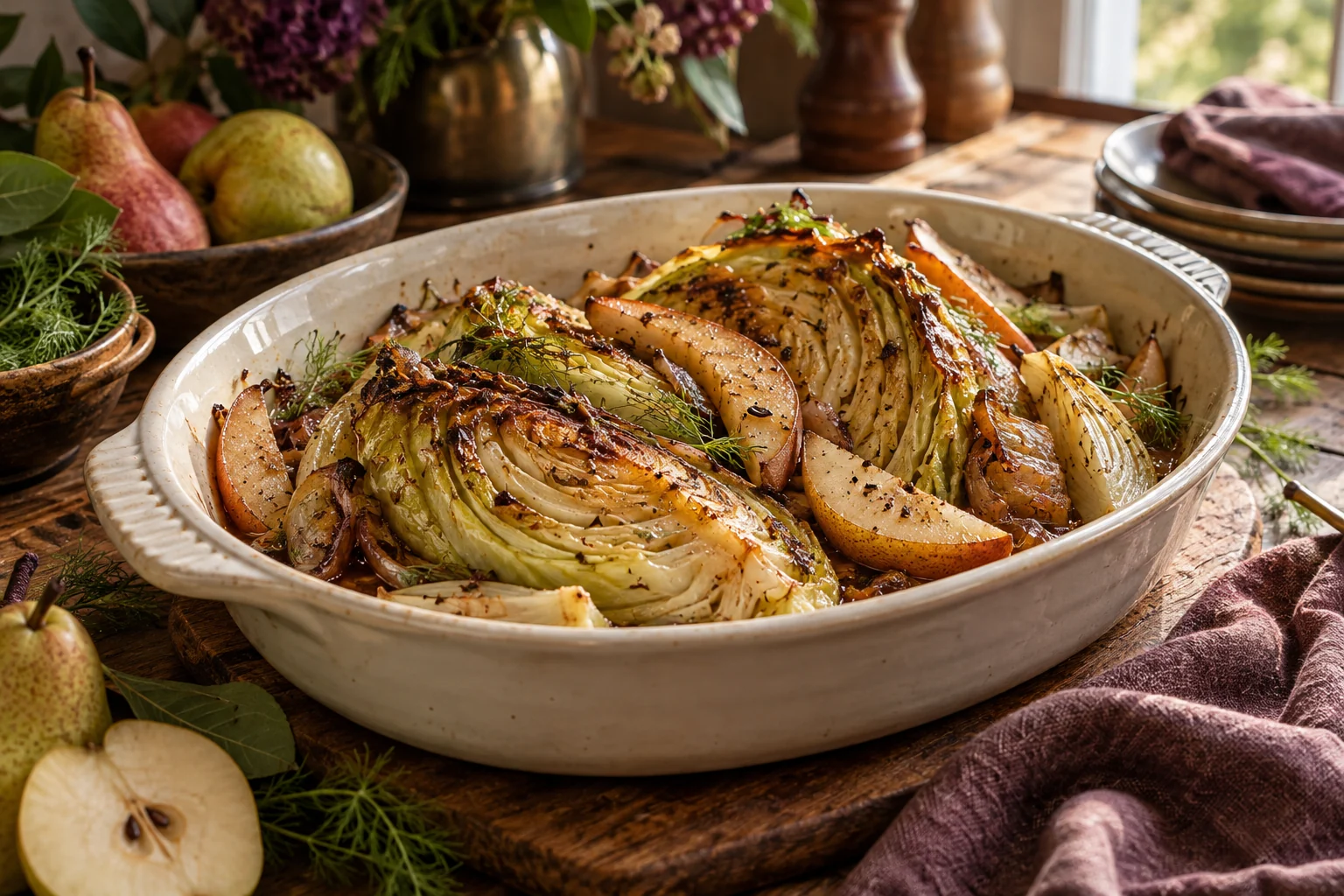
Cabbage becomes a different kind of supper companion when you stop treating it as a pile of shredded leaves. Cut into wedges, browned on one face, and braised until tender, it holds enough structure to serve neatly while absorbing the flavor of the pan. Apples and cider bring sweetness; mustard and a measured splash of vinegar keep that sweetness from becoming the whole story.
This Homeketeers recipe is a substantial side dish for four. Pair it with cooked beans, roast chicken, sausages, or another main you already make. It is not a complete meal simply because the pan looks generous. The distinctive method is a two-stage tenderness check: first judge the browned surface, then the dense core. That small distinction prevents a beautiful wedge from arriving at the table with an unexpectedly tough center.
Gather ingredients for a pan that fits
Use 1 small green cabbage, about 2 pounds; 2 firm apples; 1 medium onion; 2 tablespoons olive oil; ¾ cup unsweetened apple cider; ½ cup low-sodium vegetable broth; 1 tablespoon Dijon mustard; 1 teaspoon apple cider vinegar to start, with more to taste; ½ teaspoon dried thyme; and ½ teaspoon fine salt, adjusted to your broth. Add black pepper at the end. Use apple cider as a nonalcoholic juice, not hard cider and not apple cider vinegar.
Choose a wide, deep skillet or a shallow Dutch oven with a lid. A twelve-inch pan is a useful starting point, but cabbage sizes differ. You should be able to place the wedges in a reasonably even layer. If they are tightly stacked, brown in batches and allow more time for braising. Have tongs and a thin knife ready for checking the core. Plan about twenty minutes of preparation and thirty-five to forty-five minutes of cooking.
Cut wedges that can remain together
Remove damaged outer leaves and rinse the cabbage. Cut it through the core into six wedges, leaving a small portion of core attached to each so the leaves remain joined. Trim only the toughest protruding stem end. A large cabbage may need eight wedges instead. Similar sizes cook more evenly than one thick wedge surrounded by narrow scraps.
Slice the onion thinly. Core the apples and cut them into thick wedges, leaving the peel if you like it. Thin apple slices may collapse before the cabbage is ready, so keep them substantial. Mix the cider, broth, mustard, and thyme in a jug. Measure the vinegar separately for the finishing stage. This preparation means you can move from browning to braising without abandoning a hot pan to search for ingredients.
Brown the cabbage in a controlled first stage
Warm the oil over medium-high heat. Add the cabbage on a cut face, working in batches if necessary. Brown for about three to five minutes per side, adjusting the heat so the surface colors without burning. You are developing flavor on the outside, not trying to cook the core completely at this stage. Move browned wedges to a plate while you soften the onion.
Add the onion to the pan and lower the heat to medium. Cook for about five minutes, stirring. If the pan is dry, add a small splash of broth rather than letting the onion scorch. Scrape up unburnt browned bits. If there is burnt residue, wipe the pan carefully before proceeding. Bitter blackened material will not become a pleasant sauce because it is covered with cider.
Braise gently and check the dense center
Return the cabbage to the pan and arrange the apples around it. Pour in the cider mixture and add the starting salt. Bring to a gentle simmer, cover, and reduce the heat. Cook for about twenty to thirty minutes, checking occasionally and adding a little broth if the pan becomes dry. The liquid should support a braise, not submerge every wedge like a soup.
Test the core with the tip of a thin knife. It should enter with little resistance while the wedge still holds together enough to lift. If the leaves are soft but the center remains firm, continue cooking gently with the lid on. Do not increase the heat sharply to force the last stage. A dry pan can burn underneath while the dense core still needs time.
Finish the pan juices after tenderness is settled
Transfer the cabbage and apples to a warm serving dish if the liquid needs reducing. Simmer the uncovered juices for a few minutes until lightly concentrated. Stir in the measured teaspoon of vinegar, then taste. Add another small amount only if the sweetness needs more balance. Different ciders and apples have different acidity, so the finishing amount is a decision rather than an automatic rule.
Taste for salt and black pepper. Spoon the juices over the wedges. If the sauce is already concentrated, do not reduce it further merely because the recipe mentions reduction. The aim is a small amount of flavorful liquid that supports the cabbage. If it tastes too sharp, a little broth can soften the concentration without turning the dish into a sugary rescue operation.
Choose apples by the job they must do
A firm apple that keeps some shape is helpful. Very soft or mealy fruit may dissolve during braising, which can still flavor the sauce but will produce a different presentation. Record the variety and result in your workbook. A slightly tart apple can offer balance, though cider, mustard, and vinegar also contribute. You do not need a rare variety to make the dish useful.
Red cabbage changes the cooking time, color, and flavor, so treat it as a variation rather than a visually identical replacement. If using it, cook until the core is tender and expect the apples and juices to take on color. Avoid claiming the dish is allergen-free: mustard is relevant for some diners, and packaged broth or condiments may contain other ingredients that need checking.
A worked example for an ordinary weeknight
Tessa has a small cabbage, two firm apples, and cooked white beans in the refrigerator. She begins the cabbage first, then warms the beans separately while the wedges braise. Her cider is quite sweet, so she tests vinegar in a spoonful of pan juice before adjusting the full pan. The apples soften but remain recognizable because she cut them thickly.
She records that the cabbage core needed twenty-eight minutes rather than twenty. Next time she can begin the pan earlier without changing the recipe. The meal feels seasonal because the ingredients and method suit the evening, not because she has staged a perfect autumn table. A usable recipe leaves room for the rest of the household to be real.
Keep leftovers useful and safe
Cool and refrigerate perishable leftovers promptly in shallow containers, within two hours or within one hour above 90°F ambient temperature. Keep the refrigerator at 40°F or below. Use the refrigerated dish within three to four days or freeze it, and reheat leftovers to 165°F. Label the container so the next meal has a date as well as a name.
The wedges may soften further on reheating. Warm them gently with a little broth, covered, then uncover if the juices need reducing. Chopped leftovers can accompany beans or rice, but do not treat adding fresh ingredients as resetting the storage clock. The oldest perishable component still matters. A thoughtful second meal begins with a clear record of the first.
Your Homeketeers field workbook: put this guide into practice
Keep the companion kitchen workbook beside the stove. It includes the recipe quantities, a preparation sequence, and spaces for the adjustments that make this meal work in your own kitchen. Record the result before changing several ingredients on the next cook.
Check the pan and cabbage
Record cabbage weight, number of wedges, and pan size. Draw the arrangement before cooking. Note whether browning will happen in one batch or two. This prevents a crowded pan from becoming an unexplained timing problem after all the ingredients are already in it.
Record the apple and cider
Write the apple variety if known, slice thickness, and cider type. Mark that the cider is nonalcoholic juice rather than vinegar. Note sweetness and acidity. These details explain many differences between batches and help you choose a finishing amount more carefully.
Track the two-stage cook
Keep separate entries for surface browning and core tenderness. Record heat changes, lid use, extra broth, and the actual time the core became tender. A browned exterior is not the final endpoint. The record should show which stage needed attention and how you responded.
Balance the pan juices
Use a spoonful to test the vinegar before changing the pan. Record starting amount, any additional amount, and whether reduction was needed. Note salt and mustard adjustments. Keep the goal specific: balanced pan juices, not an increasingly complicated sauce with every pantry flavor added.
Build the plate around the side
Write the main food and any additional component you will serve. Plan overlapping steps during the braise. Note dietary needs and condiment labels. This turns a promising side dish into a realistic meal plan without making the cabbage carry nutritional or practical roles it does not fill alone.
Plan storage and reuse
Record cooling, container date, portions, and the next use. Note whether you will reheat wedges or chop them. Keep the original storage date when combining with a new meal. A useful leftover plan accounts for texture and food safety as well as avoiding waste.
Keep a record that tells you what actually changed
After the meal, circle the tenderness endpoint you preferred and write one timing note. If the apples collapsed, decide whether that mattered to the way you served them. Keep the vinegar adjustment with the cider brand or sweetness note. The recipe’s repeatable value comes from matching browning, gentle cooking, and a balanced finish to the ingredients you actually bought.