
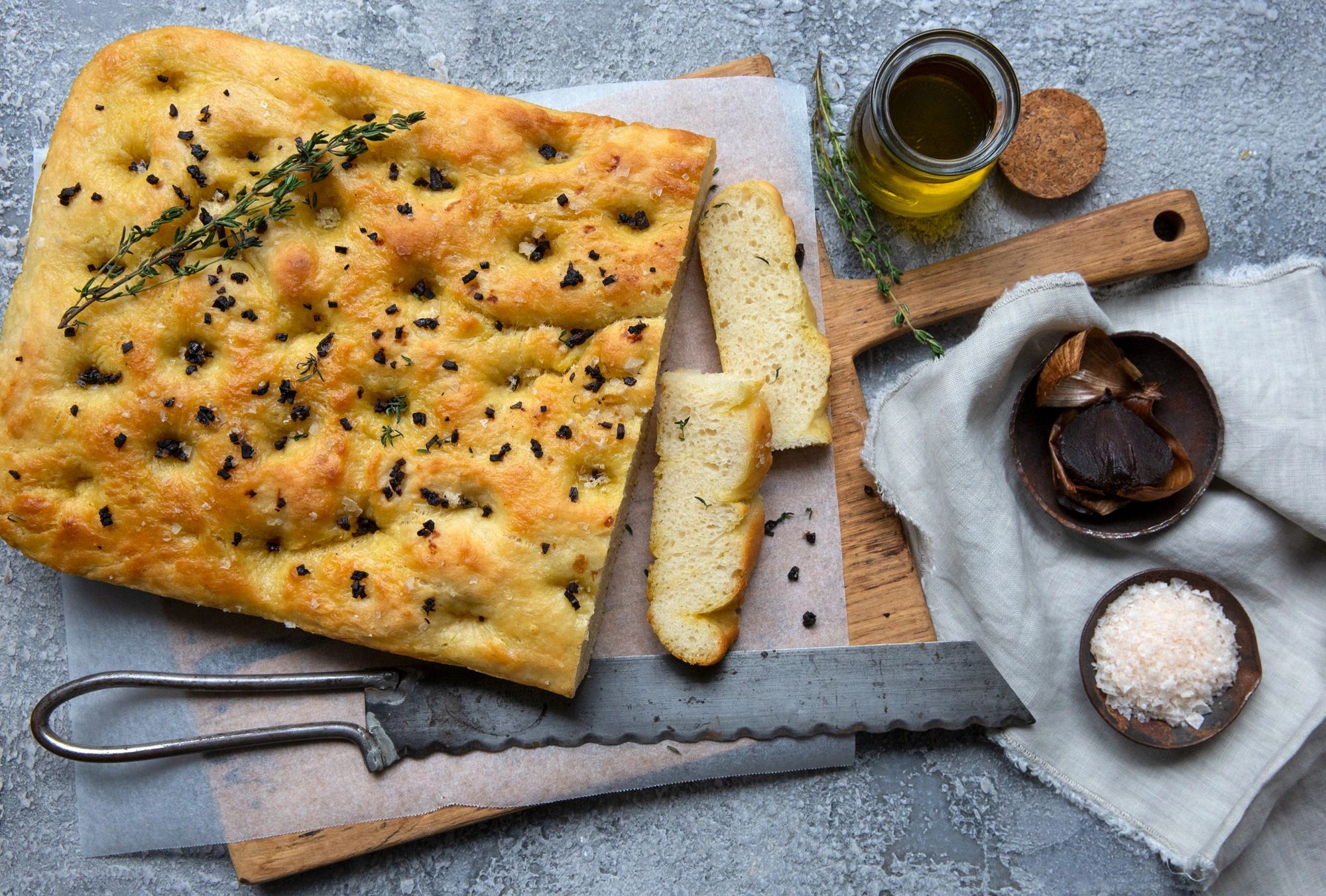
The Story & Hearth Inspiration
Focaccia is one of the most forgiving breads you can make, which is exactly why it belongs in a home kitchen. It does not ask for perfect shaping or specialty equipment. It wants time, olive oil, and the confidence to push your fingers all the way down into a living, bubbly dough.
This loaf takes that familiar ritual somewhere darker and more interesting. Black garlic is ordinary garlic transformed through controlled aging until the cloves become soft, nearly black, and surprisingly sweet. Its flavor lands somewhere between roasted garlic, balsamic, tamarind, and molasses. Against grassy olive oil and smoke-edged salt, it gives focaccia depth without making the bread aggressively garlicky.
Rosemary turns the top into a small piece of edible art. Lay the needles in branches, moons, wreaths, or loose botanical shapes. There is no need to make the pattern precious. The oven will move it. The dough will rise around it. That change is part of the beauty.
Rosemary has centuries of culinary and folk associations with remembrance, protection, and household blessing. Salt has likewise carried symbolic meaning across cultures. I treat those associations as tradition and personal ritual, not scientific measurements of energy. If placing rosemary on bread helps you mark a new season or make dinner feel intentional, that is enough.
Flavor & Ingredient Notes
Bread flour gives the loaf enough strength to hold large bubbles, but all-purpose flour works if that is what you keep. The dough is intentionally wet. Resist adding handfuls of flour simply because it sticks. Water is one reason focaccia develops an open, tender crumb.
Use actual black garlic, not raw garlic browned in a pan. Mash the cloves lightly with a fork. Some can dissolve into the olive oil and some should remain in small pockets. Smoked sea salt varies dramatically in intensity, so start lightly. You can always finish the baked loaf with another pinch.
Olive oil is not decoration in focaccia. It fries the bottom and edges against the pan, perfumes the crumb, and keeps the surface supple. Use an extra-virgin oil you enjoy tasting. Honey gives the yeast a quick start but does not make the finished bread sweet.
Step-by-Step Cooking Guide
Begin by waking the yeast in warm, not hot, water with honey. If the water is uncomfortable on your wrist, it is too hot. After about ten minutes the surface should look creamy or foamy. Stir in flour and salt until no dry pockets remain. The dough will look shaggy and almost too loose. That is correct.
Oil the dough generously, cover it, and let time do most of the work. A two-hour rise works in a warm kitchen, while a cooler room may need closer to four. For even better flavor, refrigerate the covered dough overnight after the first thirty minutes, then let it warm before transferring to the pan.
Once in a well-oiled 9-by-13-inch pan, stretch gently. If it snaps back, stop for ten minutes and try again. Pour more olive oil over the top. Press your fingertips straight down until they nearly touch the pan. Those dimples become little wells of oil and salt.
Press pieces of black garlic into some dimples, then arrange rosemary. Keep large woody stems off the bread and use tender sprigs or individual needles. Sprinkle with smoked salt immediately before baking. A fully heated 425°F oven gives the bottom enough heat to become crisp before the interior dries.
Black Garlic & Smoked Sea Salt Focaccia
Prep: 20 minutes | Rise: 2 to 4 hours | Bake: 22 to 25 minutes | Yield: one 9x13 loaf
Ingredients
- 1 1/2 cups warm water
- 1 teaspoon honey
- 2 1/4 teaspoons active dry yeast
- 3 1/2 cups bread flour
- 1 teaspoon fine sea salt
- 1/4 cup extra-virgin olive oil, plus 3 tablespoons for the top and more for the pan
- 6 to 8 black garlic cloves, lightly mashed
- 3 to 5 tender rosemary sprigs
- 1/2 to 1 teaspoon smoked sea salt, to taste
Instructions
- Whisk warm water, honey, and yeast. Rest 10 minutes.
- Stir in flour and fine salt until a sticky shaggy dough forms.
- Drizzle with 1/4 cup olive oil. Cover and rise 2 to 4 hours until doubled and bubbly.
- Generously oil a 9x13-inch metal pan. Transfer dough and gently stretch toward corners.
- Heat oven to 425°F. Pour 3 tablespoons olive oil over dough and dimple deeply.
- Press black garlic into dimples. Arrange rosemary and sprinkle with smoked sea salt.
- Bake 22 to 25 minutes until deeply golden with crisp edges. Cool at least 15 minutes.
Cook's Notes
For an overnight version, refrigerate the covered dough after a 30-minute room-temperature start, up to 24 hours. Bring it toward room temperature before panning. Store tightly wrapped for two days or freeze sliced portions. Reheat at 350°F.
Making the Rosemary Stencil
Think in silhouettes rather than tiny details. A central rosemary branch with smaller branches angled outward reads beautifully after baking. A wreath works well around the perimeter. For a moon shape, curve small clusters into a crescent and leave the center open. Brush the herbs lightly with oil so exposed tips are less likely to scorch.
This is also a good bread to make with children because the decoration does not need precision. Let everyone claim a corner. The result becomes a record of the hands that made dinner, which is more interesting than a bakery-perfect surface anyway.
Serving and Keeping
Serve it beside soup, split it horizontally for sandwiches, or put torn pieces on a board with cheese, olives, apples, and roasted vegetables. Day-old focaccia makes excellent croutons. The black garlic is particularly good with sharp cheddar, goat cheese, white beans, squash, and anything with a little acidity.
If you are baking this as part of a seasonal ritual, make the pattern mean something to you. A branch can represent continuity, a circle can mark completion, and an intentionally imperfect arrangement can simply be permission to stop performing perfection in your own kitchen.