
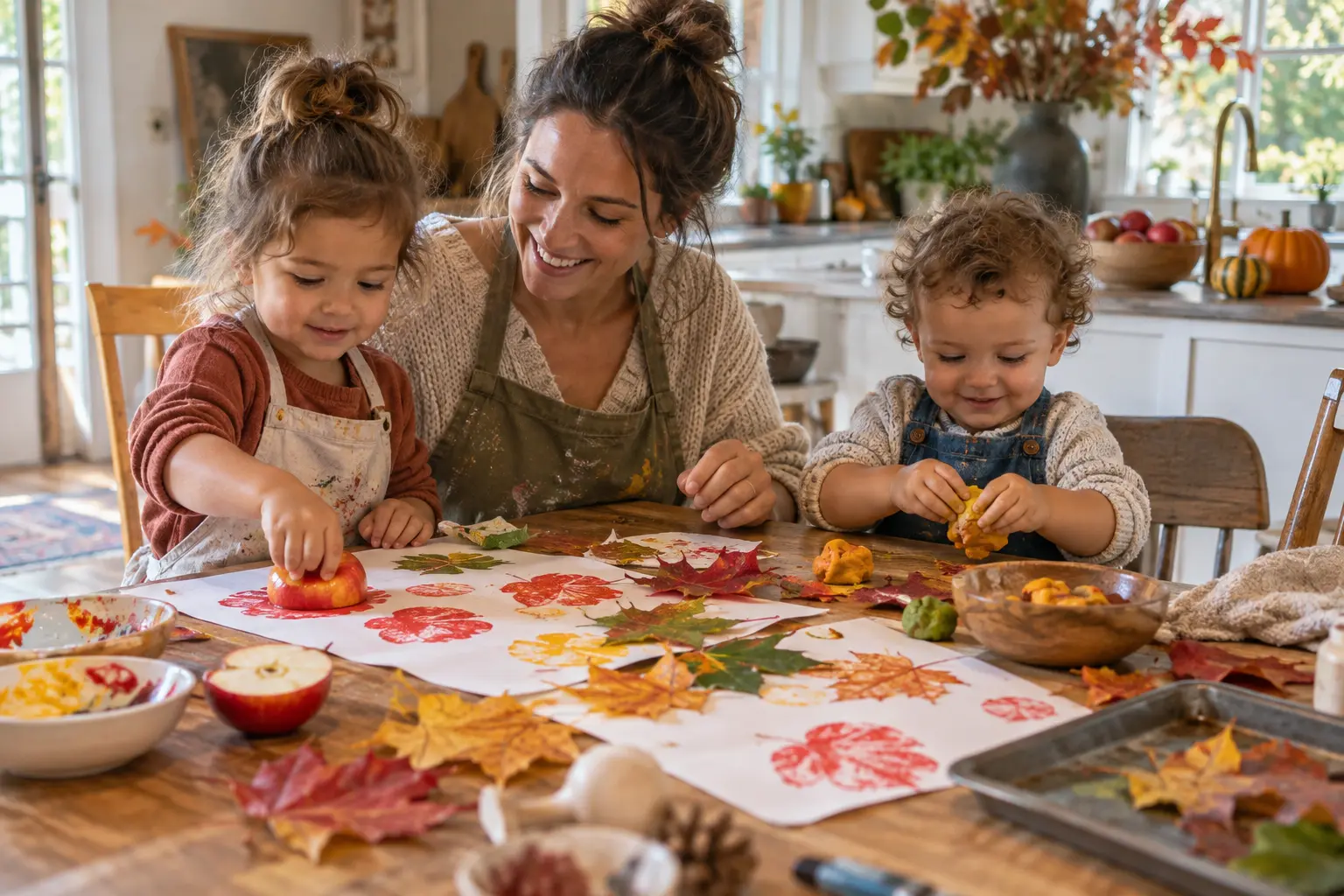
A toddler does not need a miniature adult ritual. They need texture, movement, repetition, and an adult who can tolerate a result that does not resemble the sample. The fall equinox gives us a simple idea they can experience: light and dark are close to equal, the season is changing, and we can notice what the earth has grown.
Set up for success
Use washable supplies, cover only the working area, and offer no more than three colors at once. Put a damp cloth within reach. Expect ten useful minutes. If the child stays longer, that is a gift. Avoid small dried beans, acorns, beads, whole nuts, and anything that becomes a choking hazard.
1. Apple-print harvest cloth
Cut an apple in half horizontally so the seed star shows. An adult removes the seeds. Pour washable fabric paint onto shallow plates and tape a square of cotton to the table. Let the toddler press the apple into paint and stamp. Use the finished cloth as a table mat, basket liner, or wall hanging. Say, “The apple grew all summer. Now we can see the star inside.”
2. Leaf color transfer
Collect broad nontoxic leaves together. Place a leaf vein-side up beneath paper and tape the paper corners. Remove the wrapper from a large beeswax crayon and help the child rub the side of it across the page. Name colors without correcting choices. Purple leaves are allowed. Tape the rubbings in a window and watch daylight move through the day.
3. Equinox sun and moon dough
Make a taste-safe dough with one cup flour, one-half cup salt, one tablespoon oil, and about one-half cup warm water. Knead until smooth. Divide it in two. Tint one half yellow with turmeric and the other purple with blueberry powder or food coloring. Toddlers can roll suns and press crescent shapes with a spoon. Do not serve the salty dough as food, and supervise children who mouth materials.
4. Nature brush painting
Tie sturdy evergreen tips or large herb sprigs to wooden clothespins to create handles. Check for sharp ends. Let the child paint on large paper using washable tempera. The marks show how different plants move. Rinse the tools afterward and compost only if the paint is certified safe for that use.
5. Two-sided gratitude lantern
Fold translucent paper around a clear jar and secure it with tape. The toddler decorates one side with sun colors and one with moon colors. An adult writes the child's words: “I like apples,” “I love Grandma,” or “I am glad for trucks.” Put a battery tea light inside. Never use flame with paper, glue, leaves, or toddler crafts.
A ten-minute toddler equinox ritual
- Stand outside or at a window and notice the air.
- Hold one sun-colored object and one moon-colored object.
- Say, “Day and night are sharing the sky.”
- Let the child name or point to one good thing.
- Turn on the lantern and sing one familiar song.
- End before the child asks to end.
When the craft falls apart
If the toddler stamps the table, calmly move the paper beneath the stamp. If they mix every color into brown, let brown be the record of the day. If they refuse, do the craft yourself beside them without pressure. Participation includes watching, carrying leaves, turning on the light, or leaving. The spiritual lesson is belonging, not compliance.
Set up for the child you actually have
Cover the table, offer only two or three materials, and skip a polished example that turns play into a test. Use washable, non-toxic supplies and pieces too large to become choking hazards. Avoid berries, mushrooms, unknown plants, and treated materials. Wash hands after gathering. The goal is ten absorbed minutes, not a perfect wreath.
Babies can explore a sealed sensory bottle, older toddlers can sort large leaves, preschoolers can thread a supervised garland, and older siblings can photograph the collection. Use simple language: “Today the light and dark are almost the same length. After today, evenings get longer.” One repeated song, battery candle, or found leaf can become the tradition.
Save what matters
Write the date and one sentence the child said on the back. Photograph the process, not only the product. Keep one piece and recycle the rest. Seasonal crafting becomes meaningful through repetition. Next year, the same apple, leaves, dough, and lantern will meet a different child because your toddler will have changed.