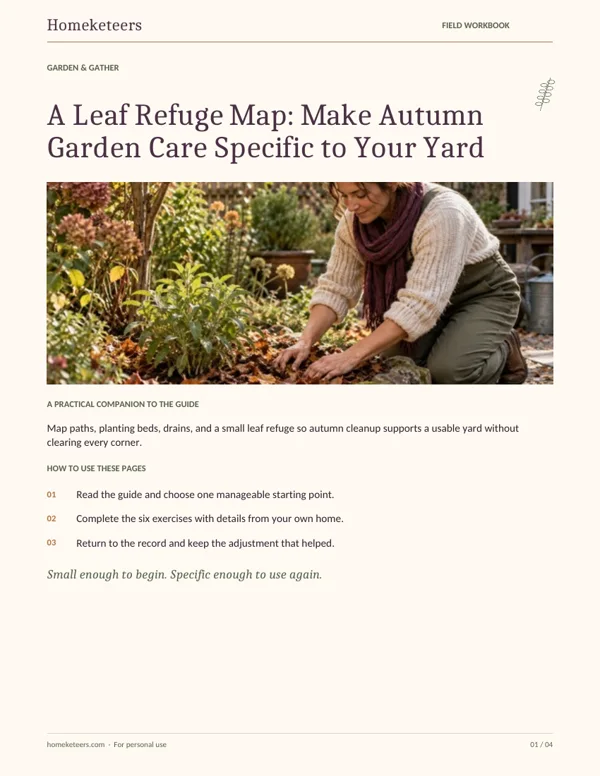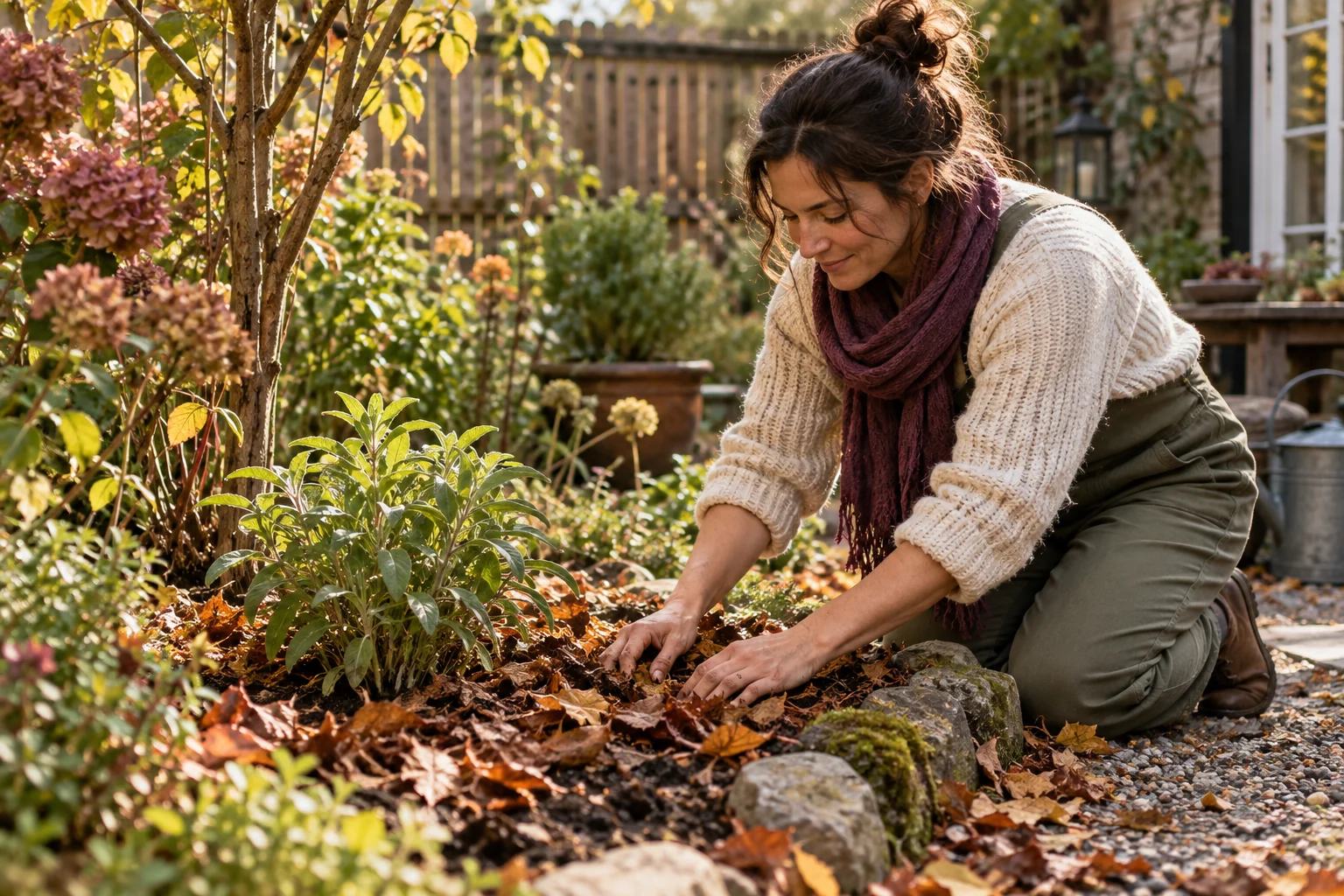
Autumn cleanup is often presented as a choice between clearing everything and touching nothing. Most households need a more specific plan. Paths must remain usable, drains must remain clear, and some plants need disease management. At the same time, leaf litter and standing stems can offer shelter for wildlife. The Homeketeers leaf refuge map helps you make decisions by area instead of treating the entire yard as one surface.
You will divide a modest garden into four zones: circulation, water movement, active planting, and refuge. The map is a household planning tool, not a wildlife survey or a fire-safety assessment. Its value lies in noticing where leaves create a problem and where leaving them can be a deliberate choice. Start with one small area you can inspect regularly.
Walk the yard before reaching for a rake
Take a notebook outside after a typical autumn day. Mark the route from door to gate, bins, driveway, and any garden areas you use. Notice steps, slopes, uneven paving, and places where wet leaves become slippery. Add drains, downspouts, and low spots. A usable yard begins with these actual routes, especially for children, older visitors, and anyone carrying a load or using a mobility aid.
Draw the rough positions of planting beds, trees, lawn, fences, and storage. Precision is less important than recognizable relationships. Include where leaves tend to collect naturally. A wind-blown corner may offer a more stable refuge than an exposed bed you would have to refill after every gust. Note the areas you do not control, including shared paths and rental-property restrictions.
Keep circulation clear with a defined route
Choose the paths that must remain clear and mark their edges on the map. Remove leaves where they conceal steps, make paving slippery, or block access. Check these routes after rain and wind, not only on one annual cleanup day. Put a small rake or broom where it is easy to use. Five minutes of targeted work may prevent a clear path from becoming a larger weekend project.
Avoid piling collected leaves against door thresholds or across a neighbor's route. Consider where the leaves go before you begin moving them. A cleanup method that simply transfers the problem to a drain or another walkway is incomplete. Your map should show both the cleared zone and a suitable destination for the material.
Follow water and protect drainage
Inspect downspout outlets and accessible surface drains. Keep leaves from blocking water movement. Do not climb onto a roof or attempt hazardous gutter work as part of this small garden project. Record inaccessible concerns for appropriate help. The leaf refuge should not sit where it will repeatedly wash into a drain or hold moisture against a structure.
Observe puddles after rainfall if you can do so safely. A thick wet pile in a low spot behaves differently from scattered leaves on a well-drained bed. Keep clearance around structures and equipment consistent with local fire guidance, especially in wildfire-prone areas. Habitat goals do not override defensible-space requirements. Choose a refuge location only after considering those constraints.
Treat plant health as a separate decision
Inspect known planting beds for disease and pests. Do not automatically move visibly diseased plant material into your refuge or ordinary compost. Identification matters because different problems need different handling. Consult your local extension office when you do not know whether debris should remain, be composted, or be removed. Keep uncertain material separate while you decide.
Avoid smothering delicate crowns or young plants under a dense mat. A light layer of leaves and a heavy compressed pile are different conditions. Some sites tolerate leaf cover well; others require adjustment. Notice the plant species, drainage, and depth of material. If you are unsure, begin with a small trial area and inspect it rather than covering every bed the same way.
Choose one refuge that can stay relatively undisturbed
Select a suitable corner or bed where some leaves can remain and where household traffic is limited. Keep the material in place as much as practical. Repeatedly shredding, moving, or searching through it can disturb the organisms you hoped to shelter. A small refuge that remains stable is more meaningful than a much larger pile handled every weekend.
Where safe and appropriate, leave some standing stems and seed heads rather than cutting every plant to the ground. Specific insects may use different parts of plants, and timing varies by species and climate. There is no universal spring date that makes all disturbance harmless. When spring arrives, inspect conditions and seek local guidance instead of relying on a single internet rule.
Make the arrangement legible to the household
Tell the people who use or maintain the yard which area is intentional. A simple label or a note on the map can prevent someone from clearing the refuge out of helpfulness. If you hire garden help, describe the boundaries directly: clear the paved route and drain, leave this marked corner unless a plant-health problem is identified. Do not expect someone to infer your priorities from an untidy patch.
Children can help draw the map and observe from the edge without disturbing the refuge. Teach them not to handle unknown insects, mushrooms, or plant material. A photograph from the same spot can document seasonal changes. You do not need to identify every creature to recognize that a garden is more than its cleanest-looking surface.
A worked example for a narrow side yard
Jo has a small side yard with a paved path, a downspout, two planting beds, and a sheltered fence corner. Her map shows that leaves gather on the path and around the downspout outlet. She clears those areas after windy weather. The fence corner sits away from the house and from the drain, so she chooses it as the small refuge after checking local requirements.
She leaves some healthy stems standing in one bed and removes material from a plant with a diagnosed disease according to extension guidance. The yard still looks cared for because the route is clear and the boundaries are deliberate. Her plan takes less work than clearing every surface, while avoiding the claim that every leaf belongs wherever it falls.
Troubleshoot the site, not the idea of care
If leaves blow back onto the path, reconsider the location or boundary of the refuge. If water collects, reduce or relocate the pile and investigate drainage. If a household member repeatedly clears the area, make the plan more visible and agree on responsibilities. If you discover a plant-health issue, manage that specific material rather than abandoning every habitat practice.
The garden will change across winter. Inspect after storms, keep access usable, and record what worked. Your map is allowed to change too. A deliberate autumn garden can hold human needs and ecological attention together, provided each choice belongs to an actual place and has a reason you can explain.
Your Homeketeers field workbook: put this guide into practice
The companion field workbook turns this guide into a record of your own place. Use the observation spaces before making changes, then keep the results beside next season’s plans. Dates, conditions, and small adjustments are more useful than a perfect-looking page.
Draw the four zones
Sketch circulation routes, water movement, active planting, and a proposed refuge. Mark doors, steps, bins, drains, and structures. Use clear symbols rather than a decorative drawing. The map should be understandable to another person who needs to maintain or use the yard.
Set the clear-path routine
List the routes that need attention after rain and wind. Record who checks them and where the tools live. Note hazards such as slippery steps or concealed uneven paving. Define a small maintenance action that can happen routinely rather than relying on one large seasonal cleanup.
Check drainage and local constraints
Mark downspout outlets, surface drains, and low spots. Record local fire guidance or property restrictions that affect refuge placement. Identify any concern requiring qualified help. Keep the refuge away from drainage obstructions and do not turn a habitat project into hazardous roof or gutter work.
Record plant-specific decisions
For each bed, note healthy stems to retain, delicate crowns to protect, and debris needing disease identification. Write the source of any removal recommendation. Keep uncertain material separate. A plant-health record should name the actual problem or the unresolved question rather than label all debris good or bad.
Define the refuge boundary
Choose one location, mark its edges, and describe what will remain there. Record traffic, drainage, and maintenance concerns. Tell household members or garden helpers the plan. Include what would justify changing it, such as water accumulation, access problems, or a diagnosed plant-health issue.
Schedule an observation return
Choose a safe viewing point and take a dated photograph. Record changes after storms and at seasonal transitions without digging through the refuge. Note spring questions for local guidance. The observation should help you decide what to maintain, not become a demand to document every organism.
Keep a record that tells you what actually changed
At the end of winter, compare the map with the yard. Did paths remain usable? Did the refuge stay in place? Did drainage behave as expected? Keep the decisions that worked and adjust the ones that created friction. A garden can look intentional without being stripped of every seasonal trace. The lasting value is a care plan rooted in the needs of the place, rather than a photograph of what autumn cleanup is supposed to look like.