A silent supper is a meal shared in quiet, often with an extra place set in remembrance of people or animals who have died. Some modern Pagan households observe one around Samhain. The practice does not require a particular belief, but it does require a clear invitation: guests should know what the silence means, how long it may last, and that they can pass or step out.
The word ‘dumb supper’ appears in some modern accounts, with ‘dumb’ used historically to mean silent. Traditions and histories vary. This guide offers a contemporary home practice, not a claim to reconstruct a closed or universal custom.
Plan the gathering before you set the table
- Keep the first gathering small: two to eight guests is easier to host than a large dinner.
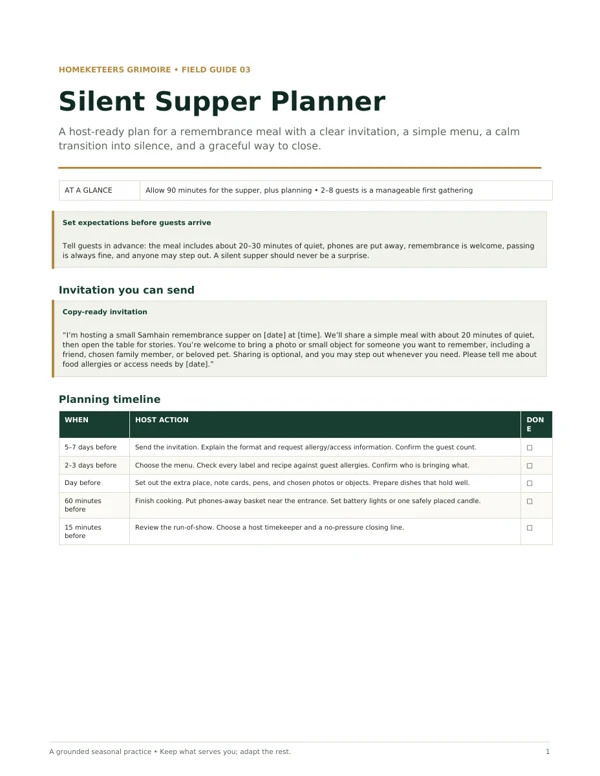
- Send an invitation several days ahead. Explain the 20-to-30-minute quiet, phones away, optional remembrance, and a spoken close. Make clear that passing is always fine.
- Ask each person what food allergies or access needs the host should plan around. Ask whether they want to bring a photo or object; do not require it.
- Choose one host to keep time and guide transitions. Decide in advance how the quiet will end: a bell, a soft tap on a glass, or one sentence.
- Choose a meal the host can serve without spending the gathering in the kitchen. One remembered favorite can anchor the menu; everything else can be simple.
Copy-ready invitation
Build a menu the host can manage
Start with one familiar dish someone being remembered loved. It can be a family recipe, boxed macaroni, bakery bread, or a simple bowl of soup. Add one main that holds well, one seasonal side, and an easy dessert. Ask guests about allergies when you invite them, read ingredient labels, use separate serving utensils, and label dishes. If you cannot safely accommodate an allergy, say so before the event and help the guest choose a safe alternative.
- Remembered favorite: Dad’s chili from a handwritten card, a friend’s rice pudding, or a beloved pet’s favorite safe treat represented symbolically.
- Seasonal side: roasted roots, cabbage and apples, or a simple grain and vegetable dish.
- Bread or shared item: a loaf or rolls to make serving easier.
- Finish: apples, a familiar dessert, tea, cider, or water.
Set one extra place
Set a plate, glass, napkin, and utensils at an empty chair or at the head of the table. Keep the display simple. Photos and objects can sit nearby, where they will not be knocked into food. A candle is optional. Use a battery light around napkins, sleeves, children, pets, or crowded tables. Keep a clear path to an exit or quiet room.
The evening, minute by minute
- Welcome guests. Offer water and show the quiet room or exit. Guests may place their objects or photos on the table; no explanation is required.
- Explain the format before anyone sits: ‘We’ll share the meal in quiet for about 20 minutes. You may eat, write, or simply sit. Passing and stepping out are always fine.’
- Enter together. The host may serve a small portion at the remembrance place first, or leave it symbolic and empty. Either choice is valid.
- Eat quietly for 20 to 30 minutes. Guests may write a private note, but no one must. If the room needs a shorter silence, end earlier.
- Close the quiet with a bell or a sentence: ‘Thank you for making this quiet together. We can speak again now.’
- Invite stories. Each guest may name the person or pet they remembered and share one story. Passing is always fine. Let the story remain a story; no one needs to interpret it as a sign.
- Close the gathering gently. Thank everyone, offer tea or a final quiet moment, and let guests leave without a required group exercise.
A completed example
Five guests gathered: two sisters, a neighbor, and an old friend. The menu was Dad’s chili, cornbread, cabbage and apples, and apple crisp. Everyone received the invitation in advance. The host rang a bell after 20 minutes. One guest passed, another told a story about a horse named Duke, and the sisters laughed about their father’s terrible singing. The supper ended with tea, not a forced closing circle.
Aftercare and alternatives
Notes belong to the person who wrote them. Guests can keep their notes or take them home; do not bury, photograph, or share someone else’s writing without permission. Remove food from the remembrance place within a day and compost or discard it. Do not give offerings to pets or wildlife. Pour drinks onto soil if that suits the household.
- Solo: Set an extra place, eat a simple meal in quiet for 10 to 15 minutes, write one private note, and close.
- With children: Shorten the quiet to five or ten minutes. Drawing or listening can replace writing.
- Recent loss: Make it a story supper with no silence. The empty place can be enough.
- Low energy: Serve soup and bread, keep the silence to ten minutes, and let guests bring their own safe dish.
The free Silent Supper Planner includes a copy-ready invitation, host timeline, allergy-aware menu builder, table layout, run-of-show, ready-to-say host lines, and a completed example. Use it to reduce last-minute decisions, not to turn remembrance into event production.
For a quiet individual practice, see Samhain Ritual: Honoring the Thin Veil. The next morning, the Samhain Ancestor Spread offers a reflective follow-up. A Chosen Ancestor Memory Table can also help you decide what belongs on the table and what should stay private.
Make consent part of the invitation
A silent meal works best when guests know what they are agreeing to before they arrive. Explain the approximate duration, whether a place will be set for the dead, whether people will be invited to tell stories, and whether the host plans to take photographs. The answer to every part can be no. The supper can still be meaningful if guests choose a story supper with no silence, or if the extra place remains empty without an object on it.
Give guests an easy way to decline without explaining why. Some people are not ready to sit with grief; others prefer not to mix spiritual practice with a meal. A private text response is often easier than a public group chat. Do not add someone’s name or photograph to the remembrance place unless they have agreed to be included.
Design the menu around the host’s capacity
A remembrance meal can be simple. Choose food you have made before, and keep the number of dishes low enough that you can sit at the table. If the remembered person loved takeout, bakery bread, or a particular packaged snack, that can be the central dish. Meaning does not depend on cooking from scratch.
Plan what can be prepared the day before, what needs the oven, and what can be served at room temperature. Put serving spoons beside dishes before guests arrive. Keep hot pans away from children and clear the table of clutter before setting the remembrance place. Ask about allergies before finalizing a menu, check labels each time, and keep packaging available so guests can verify ingredients.
Make the silence comfortable rather than theatrical
Silence can feel awkward at first. Tell guests what they can do with that time: eat, look at the table, write a private note, or simply sit. Keep water within reach. If a guest needs to speak for a practical reason, there is no need to scold them. The host can acknowledge it and return to quiet if the group wants to.
Twenty minutes is a suggestion, not a threshold. Ten minutes may fit a family meal or a first gathering. A longer period might suit people who choose it. Watch the room rather than the clock alone. If someone looks overwhelmed, the host can shorten the silence or offer a quiet break. The point is shared attention, not endurance.
Protect the stories that are shared
A story told at the table belongs to the person who shared it. Do not record audio, post photos, or repeat a guest’s account outside the gathering without permission. Some guests may choose a joyful memory; others may mention a complicated relationship. No one should be asked to forgive, reconcile, or offer a lesson. Let the story end where the teller ends it.
If guests remember the same person differently, allow that difference. The host does not need to resolve the family record. You can say, ‘That is one part of how you remember them,’ and move on. Protecting people’s boundaries is more useful than making every account agree.
Plan a graceful ending before you need one
Choose a closing line that does not imply that grief is finished. ‘Thank you for making this quiet together. We can speak again now’ is enough. Then offer an ordinary transition such as tea, dessert, washing dishes, or stepping outside. Guests should know they can leave when they need to and do not have to stay for a second ritual.
After the gathering, clear the remembrance plate safely. Notes remain with the people who wrote them. The host may send a simple thank-you the next day, but should not ask guests to report how the evening affected them. The best measure of a successful supper is whether the plan gave people a choice and made room for a memory without requiring a performance.